


2V0-642 - VMware Certified Professional 6 - Network Virtualization (NSX v6.2)
The VMware 2V0-642 exam is part of the new VMware Certified Professional 6 - Network Virtualization (NSX v6.2). This VMware exam measures your ability and skills related to the creation of advanced VMware NSX 6.x environment using Cross-vCenter technologies. This exam validates that you have the skills required to successfully install, deploy, scale and manage complex VMware NSX scenarios and Virtual Networks. This exam requires a solid knowledge of the NSX deployments when architecting virtual cloud environments. VMware certified professionals can design complex systems solutions for enterprise installing, configuring and managing the NSX suite products optimizing and scaling them at any time This exam tests your skills and abilities installing, configuring and administering a VMware NSX environment..
This is a list of exam subjects you can follow:
- Configure VMware NSX Virtual Networks
- Configure and Manage NSX Network Services
- Configure and Administer Network Security
- Troubleshoot a VMware Network Virtualization Implementation
- Understand VMware NSX Technology and Architecture
- Install and Upgrade VMware NSX
- Understand VMware NSX Physical Infrastructure Requirements
- Perform Operations Tasks in a VMware NSX Environment
- Deploy a Cross-vCenter NSX Environment
- Configure and Manage vSphere Networking
Stimulate the real exam
Our 2V0-642 study practice guide boosts the function to stimulate the real exam. The clients can use our software to stimulate the real exam to be familiar with the speed, environment and pressure of the real 2V0-642 exam and get a well preparation for the real exam. Under the virtual exam environment the clients can adjust their speeds to answer the 2V0-642 questions, train their actual combat abilities and be adjusted to the pressure of the real test. They can also have an understanding of their mastery degree of our 2V0-642 study practice guide. The clients can use our software to stimulate the real exam at any time and there are no limits for the times of stimulation.
Free trials
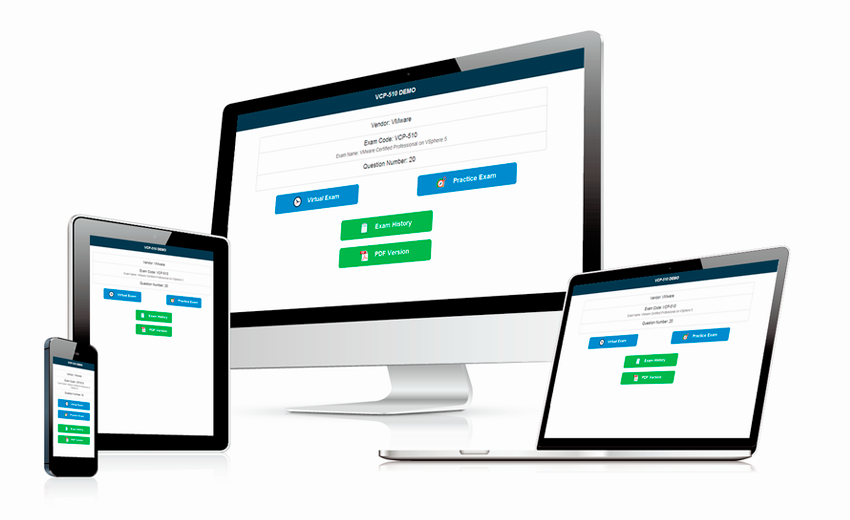
Before the clients purchase our 2V0-642 study practice guide, they can have a free trial freely. The clients can log in our company's website and visit the pages of our products. The pages of our products lists many important information about our VMware Certified Professional 6 - Network Virtualization 6.2 Exam exam materials and they include the price, version and updated time of our products, the exam name and code, the total amount of the questions and answers, the merits of our 2V0-642 useful test guide and the discounts. You can have a comprehensive understanding of our 2V0-642 useful test guide after you see this information. Then you can look at the free demos and try to answer them to see the value of our VMware Certified Professional 6 - Network Virtualization 6.2 Exam exam materials and finally decide to buy them or not.
Save time
Our 2V0-642 useful test guide materials present the most important information to the clients in the simplest way so our clients need little time and energy to learn our 2V0-642 useful test guide. The clients only need 20-30 hours to learn and prepare for the test. For those people who are busy in their jobs, learning or other things this is a good news because they needn't worry too much that they don't have enough time to prepare for the test and can leisurely do their main things and spare little time to learn our 2V0-642 study practice guide. So it is a great advantage of our VMware Certified Professional 6 - Network Virtualization 6.2 Exam exam materials and a great convenience for the clients.
Our world is in the state of constant change and evolving. If you want to keep pace of the time and continually transform and challenge yourself you must attend one kind of VMware certificate test to improve your practical ability and increase the quantity of your knowledge. Buying our 2V0-642 study practice guide can help you pass the test smoothly. Our VMware Certified Professional 6 - Network Virtualization 6.2 Exam exam materials have gone through strict analysis and verification by senior experts and are ready to supplement new resources at any time. We try our best to present you the most useful and efficient information about the test and provide multiple functions and intuitive methods to help the clients learn efficiently. Learning our 2V0-642 useful test guide costs you little time and energy. The passing rate and hit rate are both high thus you will encounter few obstacles to pass the test. You can further understand our 2V0-642 study practice guide after you read the introduction as follow.

VMware VCP-NV 2020 Exam Syllabus Topics:
| Section | Objectives |
|---|---|
Section 1: Understand VMware NSX Technology and Architecture | |
| Compare and Contrast the Benefits of a VMware NSX Implementation | -Determine challenges with physical network implementations -Understand common VMware NSX terms -Differentiate NSX network and security functions and services -Differentiate common use cases for VMware NSX |
| Understand VMware NSX Architecture | -Differentiate component functionality of NSX stack infrastructure components - Compare and contrast with advantages/disadvantages of topologies (star, ring, etc.) as well as scaling limitations -Compare and contrast VMware NSX data center deployment models -Prepare a vSphere implementation for NSX |
| Prepare a vSphere implementation for NSX | - Differentiate logical and physical topologies, components and services -Differentiate logical and physical security constructs
|
| Understand VMware NSX Integration with Third-Party Products and Services | -Understand integration with third-party partner tools and systems using NSX REST APIs -Determine integration with third-party services
-Determine integration with third-party hardware
-Install/register a third-party service with NSX |
| Understand VMware NSX Integration with vRealize Automation (vRA) | -Understand integration with vRealize Automation -Demonstrate NSX deployment capabilities built into vRealize Automation -Compare and contrast Network Profiles available in vRealize Automation -Understand NSX preparation tasks for attaching a network profile to a blueprint - Discern vRealize Automation preparation tasks for deploying a machine with on-demand network services |
Section 2: Understand VMware NSX Physical Infrastructure Requirements | |
| Compare and Contrast the Benefits of Running VMware NSX on Physical Network Fabrics | -Differentiate physical network topologies
-Differentiate virtual network topologies
-Given a specific physical topology, determine what challenges could be addressed by aVMware NSX implementation. |
| Determine Physical Infrastructure Requirements for a VMware NSX Implementation | -Discern management and edge cluster requirementsDifferentiateminimum/optimalphysicalinfrastructurerequirementsfora VMwareNSX implementation -Determine how traffic types are handled in a physical infrastructure -Determine use cases for available virtual architectures -Describe ESXi host vmnic requirements -Differentiate virtual to physical switch connection methods -Compare and contrast VMkernel networking scenarios |
Section 3: Configure and Manage vSphere Networking | |
| Configure and Manage vSphere Distributed Switches (vDS) | -Compare and contrast vDS capabilities -Create/Delete a vDS -Add/Remove ESXi hosts from a vDS -Edit general vSphere vDS settings -Add/Configure/Remove dvPortgroups - Configure dvPort settings -Add/Remove uplink adapters to dvUplinkgroups -Create/Configure/Remove virtual adapters -Migrate virtual machines to/from a vDS -Monitor dvPort state -Determine use cases for a vDS |
| Configure and Manage vDS Policies | -Compare and contrast common vDS policies -Configure dvPortgroup blocking policies -Explain benefits of Multi-Instance TCP/IP stack -Configure load balancing and failover policies -Configure VLAN settings -Configure traffic shaping policies -Enable TCP Segmentation Offload (TOE) support for a virtual machine -Enable Jumbo Frame support on appropriate components -Determine appropriate VLAN configuration for a vSphere implementation -Understand how DSCP is handled in a VXLAN frame |
Section 4: Install and Upgrade VMware NSX | |
| Configure Environment for Network Virtualization | - Comprehend physical infrastructure configuration for NSX Compute, Edge and Management clusters (MTU, Dynamic Routing for Edge, etc.) -Prepare a Greenfield vSphere Infrastructure for NSX Deployment
-Configure a Brownfield vSphere Infrastructure for NSX |
| Deploy VMware NSX Components | -Install/Register NSX Manager -Prepare ESXi hosts -Deploy NSX Controllers -Understand assignment of Segment ID Pool and appropriate need for Multicast addresses -Install Guest Introspection -Create an IP pool -Understand when to use IP Pools versus DHCP for VTEP configuration |
| Upgrade Existing vCNS/NSX Implementation | - Based on a given upgrade scenario, identify requisite steps and components for upgrading to NSX 6.x -Upgrade vCNS 5.5 to NSX 6.x -Upgrade vCNS Virtual Wires to NSX Logical Switches -Upgrade to NSX Components
-Upgrade NSX Manager from 6.0 to 6.x |
| Expand Transport Zone to Include New Cluster(s) | -Understand the function of a Transport Zone -Understand proper addition of a Transport Zone -Understand necessity to expand or contract a Transport Zone -Edit a Transport Zone -Understand appropriate use of Control Plane mode modification of a Transport zone |
Section 5: Configure VMware NSX Virtual Networks | |
| Create and Administer Logical Switches | -Given a scenario, demonstrate the proper way to add/remove a Logical Switch -Determine use case for and contrast the three Control Plane Modes
-Deploy services to a Logical Switch |
| Configure VXLAN | -Determine areas where VXLANs should be configured -Understand physical network requirements for virtual topologies with VXLANs -Understand how to prepare a vSphere cluster for VXLAN -Determine the appropriate teaming policy for a given implementation -Understand how to configure and modify the options of a Transport Zone -Understand how prepare VXLAN Tunnel End Points (VTEPs) on vSphere clusters |
| Configure and Manage Layer 2 Bridging | -Given a scenario, determine an appropriate High Availability configuration for Layer 2 Bridging -Understand how to add a Layer 2 Bridge to an NSX Edge device -Determine when Layer 2 Bridging would be required for a given NSX implementation -Determine use cases for multiple Layer 2 Bridges -Compare and contrast software and hardware bridging |
| Configure and Manage Logical Routers | -Install NSX Edge -Understand how to connect/disconnect a Logical Switch from a logical router -Understand and describe the different types of router interfaces -Determine NSX components needed to build out topologies with logical routers -Understand how to add and configure a new logical router -Determine use case for and configure a management interface -Determine use case for and configure High Availability for a logical router -Configure routing protocols
-Configure default gateway |
Section 6: Configure and Manage NSX Network Services | |
| Configure and Manage Logical Load Balancing | -Differentiate when to use the two topologies for load balancing -Understand how to configure load balancing -Configure and understand service monitors -Understand how to Add/Edit/Delete a server pool -Understand how to Add/Edit/Delete an application profile -Understand how to Add/Edit/Delete virtual servers -Determine appropriate NSX Edge instance size based on load balancing requirements |
| Configure and Manage Logical Virtual Private Networks (VPN) | -Understand how to configure IPSec VPN
-Understand how to configure Layer 2 VPN
-Configure Network Access/Web Access SSL VPN-Plus
-Determine appropriate VPN service type for a given NSX implementation |
| Configure and Manage DHCP/DNS/NAT | -Understand proper use and addition of a DHCP IP Pool -Enable a DHCP IP pool -Determine use and proper implementation of DNS services -Determine when and how to configure Source NAT -Determine when and how to configure Destination NAT -Given a scenario, compare and contrast proper DHCP uses |
| Configure and Manage Edge Services High Availability | -Given a scenario, compare and contrast proper HA uses -Determine service availability during an Edge High Availability failover -Differentiate NSX Edge High Availability and vSphere High Availability -Configure NSX Edge High Availability
-Modify and existing Edge High Availability deployment
- Combine ECMP with other stateful services |
Section 7: Configure and Administer Netw Network Security | |
| Configure and Administer Logical Firewall Services | -Add/Edit/Delete an Edge Firewall rule -Configure Source/Destination/Service/Action rule components - Compare and contrast between Edge Rule Types (PreRules/Internal/User Rules/Default Rules) -Change the order of an Edge User Firewall rule -Demonstrate how to configure an Edge Firewall PreRule -Understand the limitations of ECMP and Edge Firewall Policy |
| Configure Distributed Firewall Services | -Understand VM IP Address learning for the purposes of DFW vCenter attribute learning -Differentiate between Layer 2 and Layer 3 rules -Differentiate between entity-based and identity-based rules -Understand firewall rule entities -Determine rule processing order -Understand rule segregation -Demonstrate steps to Add/Delete a Distributed Firewall rule -Demonstrate configuration of Source/Destination/Service/Action rule components -Change the order of a Distributed Firewall rule -Add/Merge/Delete a Distributed Firewall rule section -Determine publishing requirements for rules in a given NSX implementation -Demonstrate Import/Export Distributed Firewall Configuration -Load Distributed Firewall configuration -Determine need for excluding virtual machines from distributed firewall protection -Describe SpoofGuard Operation and Default Policy and Actions -Describe SpoofGuard IP Address Learning -Determine requirements for a Spoofguard Policy -Demonstrate how to Create and Edit a SpoofGuard Policy
|
| Configure and Manage Service Composer | -Understand assets that can be used with a Security Group -Differentiate services contained in a Security Policy -Compare and contrast common Service Composer use cases -Differentiate third party integration and service redirection -Differentiate Security Groups and Security Policies -Demonstrate the ability to redirect specific flows (e.g. 80) to network introspection services - Differentiate between vCenter attribute based Firewall rules (including IP Sets) vs Active Directory identity-based rule -Create/Edit a Security Group in Service Composer -Create/Edit/Delete a Security Policy in Service Composer -Map a Security Policy to a Security Group -Add/Edit/Delete a Security Tag -Assign and view a Security Tag |
Section 8: Deploy a Cross-vCenter NSX environment | |
| Differentiate single and Cross-vCenter NSX deployments | -Understand the benefits/use cases for Cross-vCenter NSX -Contrast single and Cross-vCenter deployment models -Determine the appropriate NSX topology for a given use case -Understand options for ingress and egress traffic flows in a multi-site topology -Describe and differentiate Universal components
|
| Determine Cross-vCenter Requirements and Configurations | -Deploy a Cross-vCenter NSX environment
-Migrate an NSX deployment to Cross-vCenter
-Compare and contrast Local and Universal Firewall Rules |
Section 9: Perform Operations Tasks in a VMware NSX Environment | |
| Configure Roles, Permissions, and Scopes | -Understand default roles -Understand Single Sign-On (SSO) integration -Configure SSO -Assign a role to a vCenter Server user or group -Compare and contrast the uses for the various NSX Security Roles - Determine how roles can be applied to a subset of the vCenter infrastructure for multi Tenancy purposes -Understand how to apply NSX Roles to an AD group -Assign objects to a user -Enable/Disable a user account -Edit/Delete a user account |
| Understand NSX Automation | -Discern common use cases that require the NSX REST API - Compare and contrast how the NSX REST API works and how it is used with a support browser -Understand how NSX REST API Calls are sent to the NSX Manager -Differentiate common NSX REST API verbs -Determine how to use NSX REST API calls to learn the network topology |
| Monitor a VMware NSX Implementation | -Compare and contrast available monitoring methods (UI, CLI, API, etc.) -Monitor infrastructure components
-Perform Inbound/Outbound activity monitoring
|
| Perform Auditing and Compliance | -Given an auditing scenario, determine where applicable log information can be located -Differentiate permissions for auditing -Differentiate common data security regulations supported by NSX Data Security -Differentiate information available in audit logs -Use flow monitoring to audit firewall rules -Audit deleted users -Audit infrastructure changes -View NSX Manager audit logs and change data -Configure NSX Data Security -Create a Data Security Policy -Install Data Security -Run a Data Security scan -View and download compliance reports -Create a regular expression -Configure Guest Introspection (Install vShield Endpoint) |
| Administer Logging | - Given a scenario, utilize information contained in technical support bundles/logs to assist in troubleshooting -Explain usage of CLI for logging -Configure Syslog(s) -Configure logging for Dynamic Routing information -Log Distributed Firewall rule processing information -Log Edge Firewall rule processing information -Log address translation information -Log VPN traffic -Configure basic/advanced Load Balancer logging -Log DHCP assignments -Log DNS resolutions -Log security policy session information -Download NSX Edge tech support logs -Generate NSX Manager tech support logs |
| Backup and Recover Configurations | -Understand how to backup and recover various components -Schedule backups -Export/Restore vSphere Distributed Switch configuration -Import/Export Service Composer profiles -Perform NSX Manager backup and restore operation |
Section 10: Troubleshoot a VMware Network Virtualization Implementation | |
| Compare and Contrast Tools Available for Troubleshooting | -Capture and trace uplink, vmknic, and physical NIC packets -Audit NSX infrastructure changes -Output packet data for use by a protocol analyzer -Capture and analyze traffic flows -Mirror network traffic for analysis -Perform a network health check -Configure vSphere Distributed Switch alarms |
| Troubleshoot Common NSX Installation/Configuration Issues | -Troubleshoot lookup service configuration -Troubleshoot vCenter Server link -Troubleshoot licensing issues -Troubleshoot permissions issues -Troubleshoot host preparation issues -Troubleshoot IP pool issues |
| Troubleshoot Common NSX Component Issues | -Differentiate NSX Edge logging and troubleshooting commands -Verify NSX Controller cluster status and roles -Verify NSX Controller node connectivity -Check NSX Controller API service -Validate VXLAN and Logical Router mapping tables -List Logical Router instances and statistics -Verify Logical Router interface and route mapping tables -Verify active controller connections -View Bridge instances and learned MAC addresses -Display Logical Router instances -Verify NSX Manager services status -View Logical Interfaces and routing tables -Analyze NSX Edge statistics |
| Troubleshoot Common Connectivity Issues | -Review netcpa logs for control plane connectivity issues -Verify VXLAN, VTEP, MAC, and ARP mapping tables -List VNI configuration -View VXLAN connection tables and statistics -Perform VTEP connectivity tests |
| Troubleshoot Common vSphere Networking Issues | -Verify network configuration -Verify a given virtual machine is configured with the correct network resources -Troubleshoot virtual switch and port group configuration issues -Troubleshoot physical network adapter configuration issues -Determine the root cause of a network issue based on troubleshooting information |
Reference: https://mylearn.vmware.com/mgrReg/plan.cfm?plan=95141&ui=www_cert


 Evelyn
 Elvis
Elvis 
 Joa
Joa  Arnold
  Arvin
Arvin 
 Marina
  Chapman
  Evangeline
  Honey
Honey  Phoebe
  Leo
Leo  Cyril
Cyril  Penelope
  Mortimer
  Jacob
Jacob  Renee
Renee 


