


Free trials
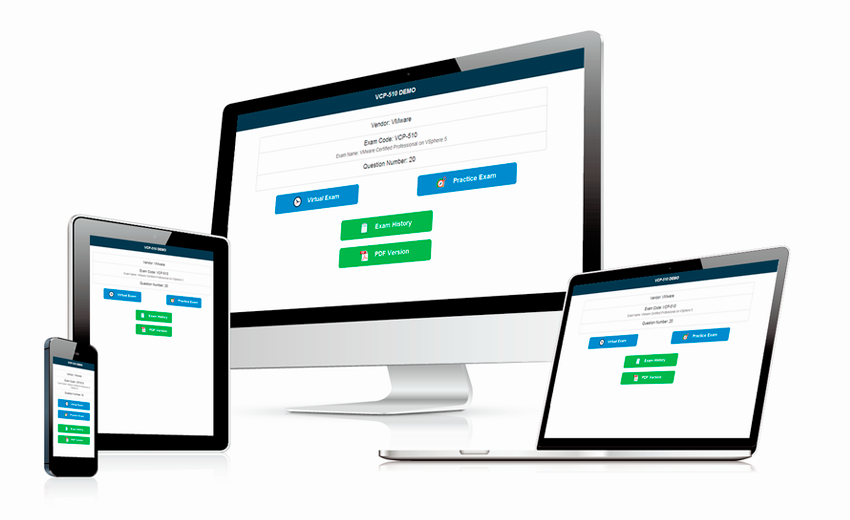
Before the clients purchase our 070-458 study practice guide, they can have a free trial freely. The clients can log in our company's website and visit the pages of our products. The pages of our products lists many important information about our Transition Your MCTS on SQL Server 2008 to MCSA: SQL Server 2012, Part 2 exam materials and they include the price, version and updated time of our products, the exam name and code, the total amount of the questions and answers, the merits of our 070-458 useful test guide and the discounts. You can have a comprehensive understanding of our 070-458 useful test guide after you see this information. Then you can look at the free demos and try to answer them to see the value of our Transition Your MCTS on SQL Server 2008 to MCSA: SQL Server 2012, Part 2 exam materials and finally decide to buy them or not.
Stimulate the real exam
Our 070-458 study practice guide boosts the function to stimulate the real exam. The clients can use our software to stimulate the real exam to be familiar with the speed, environment and pressure of the real 070-458 exam and get a well preparation for the real exam. Under the virtual exam environment the clients can adjust their speeds to answer the 070-458 questions, train their actual combat abilities and be adjusted to the pressure of the real test. They can also have an understanding of their mastery degree of our 070-458 study practice guide. The clients can use our software to stimulate the real exam at any time and there are no limits for the times of stimulation.
Save time
Our 070-458 useful test guide materials present the most important information to the clients in the simplest way so our clients need little time and energy to learn our 070-458 useful test guide. The clients only need 20-30 hours to learn and prepare for the test. For those people who are busy in their jobs, learning or other things this is a good news because they needn't worry too much that they don't have enough time to prepare for the test and can leisurely do their main things and spare little time to learn our 070-458 study practice guide. So it is a great advantage of our Transition Your MCTS on SQL Server 2008 to MCSA: SQL Server 2012, Part 2 exam materials and a great convenience for the clients.
Our world is in the state of constant change and evolving. If you want to keep pace of the time and continually transform and challenge yourself you must attend one kind of Microsoft certificate test to improve your practical ability and increase the quantity of your knowledge. Buying our 070-458 study practice guide can help you pass the test smoothly. Our Transition Your MCTS on SQL Server 2008 to MCSA: SQL Server 2012, Part 2 exam materials have gone through strict analysis and verification by senior experts and are ready to supplement new resources at any time. We try our best to present you the most useful and efficient information about the test and provide multiple functions and intuitive methods to help the clients learn efficiently. Learning our 070-458 useful test guide costs you little time and energy. The passing rate and hit rate are both high thus you will encounter few obstacles to pass the test. You can further understand our 070-458 study practice guide after you read the introduction as follow.

Microsoft Transition Your MCTS on SQL Server 2008 to MCSA: SQL Server 2012, Part 2 Sample Questions:
1. DRAG DROP
You are developing a SQL Server Integration Services (SSIS) package.
The package contains an ActiveX Data Objects (ADO) source variable that holds a result set that was returned by a stored procedure execution.
You need to add and configure a container that will execute several tasks for each row in the ADO object source variable.
Which three actions should you perform in sequence? (To answer, move the appropriate actions from the list of actions to the answer area and arrange them in the correct order.)
2. HOTSPOT
You are developing a SQL Server Integration Services (SSIS) package.
You use a Data Profiling task to examine the data from a source system.
You need to establish: - The minimum and maximum dates for the datetime columns in the source data - The minimum, maximum, and average values for numeric columns in the source data You need to use the appropriate profile type in the Data Profiling task.
Which profile type should you use? (To answer, select the appropriate profile type in the answer area.)
3. You are a database administrator for a Microsoft SQL Server 2012 environment.
You want to deploy a new application that will scale out the workload to at least five different SQL Server instances.
You need to ensure that for each copy of the database, users are able to read and write data that will then be synchronized between all of the database instances.
Which feature should you use?
A) failover clustering
B) peer-to-peer replication
C) database audits
D) snapshot replication
4. You are developing a SQL Server Integration Services (SSIS) package to load data into a
Windows Azure SQL Database database. Thepackage consists of several data flow tasks.
The package has the following auditing requirements:
- If a data flow task fails, a Transact-SQL (T-SQL) script must be executed. - The T-SQL script must be executed only once per data flow task that fails, regardless of the nature of the error.
You need to ensure that auditing is configured to meet these requirements.
What should you do?
A) Create a table to store error information. Create an error output on each data flow destination that writes OnTaskFailed event text to the table.
B) Use an event handler for OnTaskFailed for the package.
C) Store the System::SourceID variable in the custom log table.
D) Create a SQL Server Agent job to execute the SSISDB.catalog.validate_project stored procedure.
E) Store the System::ServerExecutionID variable in the custom log table.
F) Store the System::ExecutionInstanceGUID variable in the custom log table.
G) Create a SQL Server Agent job to execute the SSISDB.catalog.validate_package stored procedure.
H) Enable the SSIS log provider for SQL Server for OnError in the package control flow.
I) Create a table to store error information. Create an error output on each data flow destination that writes OnError event text to the table.
J) Deploy the project by using dtutil.exe with the /COPY DTS option.
K) Deploy the .ispac file by using the Integration Services Deployment Wizard.
L) View the job history for the SQL Server Agent job.
M) Create a SQL Server Agent job to execute the SSISDB.catalog.create_execution and SSISDB.catalog.*tart_execution stored procedures.
N) View the All Messages subsection of the All Executions report for the package.
O) Deploy the project by using dtutil.exe with the /COPY SQL option.
P) Use an event handler for OnError for the package.
Q) Enable the SSIS log provider for SQL Server for OnTaskFailed in the package control flow.
R) Use an event handler for OnError for each data flow task.
5. Note: This question is part of a series of questions that use the same or similar answer choices. An answer choice may be correct for more than one question in the series. Each question is independent of the other questions in this series. Information and details provided in a question apply only to that question.
You are deploying a new SQL Server Integration Services (SSIS) package to several servers.
The package must meet the following requirements:
- INET Common Language Runtime (CLR) integration in SQL Server must not be enabled. - The Connection Managers used in the package must be configurable without editing the package. - The deployment procedure must be automated as much as possible.
You need to set up a deployment strategy that meets the requirements.
What should you do?
A) Deploy the package by using an msi file.
B) use the Project Deployment Wizard.
C) use the dtutll /copy command.
D) create an OnError event handler.
E) Use the gacutil command.
F) Deploy the package to the Integration Services catalog by using dtutil and use SQL Server to store the configuration.
G) Run the package by using the dtexec /rep /conn command.
H) Run the package by using the dtexec /dumperror /conn command.
I) create a reusable custom logging component.
J) Run the package by using the dtexecui.exe utility and the SQL Log provider.
K) Add a data tap on the output of a component in the package data flow.
Solutions:
| Question # 1 Answer: Only visible for members | Question # 2 Answer: Only visible for members | Question # 3 Answer: B | Question # 4 Answer: B | Question # 5 Answer: C |


 Lydia
Lydia 
 Regan
Regan 
 Bob
Bob 
 Blanche
  Prescott
  Teresa
  Maximilian
  Eli
Eli  Cathy
Cathy  Lewis
Lewis  Miranda
  Sandy
Sandy  Betty
Betty  Hyman
Hyman  Herman
  Clyde
Clyde  Valerie
  Leif
Leif  Maximilian
  Elmer
Elmer  Antonio
  Dunn
Dunn  Ryan
Ryan  Werner
  Troy
Troy 


