


Our world is in the state of constant change and evolving. If you want to keep pace of the time and continually transform and challenge yourself you must attend one kind of The Open Group certificate test to improve your practical ability and increase the quantity of your knowledge. Buying our OGEA-102 study practice guide can help you pass the test smoothly. Our TOGAF Enterprise Architecture Part 2 Exam exam materials have gone through strict analysis and verification by senior experts and are ready to supplement new resources at any time. We try our best to present you the most useful and efficient information about the test and provide multiple functions and intuitive methods to help the clients learn efficiently. Learning our OGEA-102 useful test guide costs you little time and energy. The passing rate and hit rate are both high thus you will encounter few obstacles to pass the test. You can further understand our OGEA-102 study practice guide after you read the introduction as follow.

Stimulate the real exam
Our OGEA-102 study practice guide boosts the function to stimulate the real exam. The clients can use our software to stimulate the real exam to be familiar with the speed, environment and pressure of the real OGEA-102 exam and get a well preparation for the real exam. Under the virtual exam environment the clients can adjust their speeds to answer the OGEA-102 questions, train their actual combat abilities and be adjusted to the pressure of the real test. They can also have an understanding of their mastery degree of our OGEA-102 study practice guide. The clients can use our software to stimulate the real exam at any time and there are no limits for the times of stimulation.
Free trials
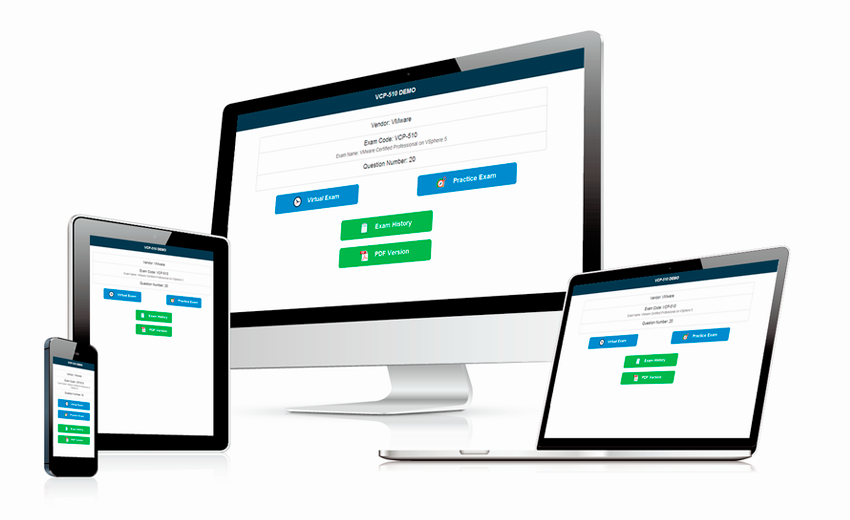
Before the clients purchase our OGEA-102 study practice guide, they can have a free trial freely. The clients can log in our company's website and visit the pages of our products. The pages of our products lists many important information about our TOGAF Enterprise Architecture Part 2 Exam exam materials and they include the price, version and updated time of our products, the exam name and code, the total amount of the questions and answers, the merits of our OGEA-102 useful test guide and the discounts. You can have a comprehensive understanding of our OGEA-102 useful test guide after you see this information. Then you can look at the free demos and try to answer them to see the value of our TOGAF Enterprise Architecture Part 2 Exam exam materials and finally decide to buy them or not.
Save time
Our OGEA-102 useful test guide materials present the most important information to the clients in the simplest way so our clients need little time and energy to learn our OGEA-102 useful test guide. The clients only need 20-30 hours to learn and prepare for the test. For those people who are busy in their jobs, learning or other things this is a good news because they needn't worry too much that they don't have enough time to prepare for the test and can leisurely do their main things and spare little time to learn our OGEA-102 study practice guide. So it is a great advantage of our TOGAF Enterprise Architecture Part 2 Exam exam materials and a great convenience for the clients.
The Open Group OGEA-102 Exam Syllabus Topics:
| Section | Weight | Objectives |
|---|---|---|
| Topic 1: Architecture Governance | 10-15% | - Architecture maturity models - Governance frameworks and processes - Compliance and decision management |
| Topic 2: Context for Enterprise Architecture | 10-15% | - Enterprise architecture value and benefits - Business and IT alignment - Enterprise architecture principles and scope |
| Topic 3: Architecture Development Method (ADM) Phases | 30-35% | - Phase F: Migration Planning - Phase C: Information Systems Architectures - Phase G: Implementation Governance - Phase D: Technology Architecture - Phase B: Business Architecture - Phase H: Architecture Change Management - Phase E: Opportunities and Solutions - Phase A: Architecture Vision |
| Topic 4: Requirements Management | 10-15% | - Requirements capture and classification - Requirements traceability and management - Integration with ADM phases |
| Topic 5: ADM Application and Tailoring | 10-15% | - Scaling and adapting the framework - Using ADM with other frameworks - Tailoring ADM for different contexts |
| Topic 6: Stakeholder Management | 15-20% | - Managing concerns and requirements - Stakeholder engagement and communication - Stakeholder identification and classification |
The Open Group TOGAF Enterprise Architecture Part 2 Sample Questions:
1. You are working as an Enterprise Architect within an Enterprise Architecture (EA) team at a multinational energy company. The company is committed to becoming a net-zero emissions energy business by 2050. To achieve this, the company is focusing on shifting to renewable energy production and adopting eco-friendly practices.
The EA team, which reports to the Chief Technical Officer (CTO), has been tasked with overseeing the transformation to make the company more effective through acquisitions. The company plans to fully integrate these acquisitions, including merging operations and systems.
To address the integration challenges, the EA team leader wants to know how to manage risks and ensure that the company succeeds with the proposed changes. Based on the TOGAF Standard, which of the following is the best answer?
A) The EA team should develop Business Architecture views that demonstrate how stakeholder concerns are addressed and assess each factor for readiness, urgency, and degree of difficulty.
B) The EA team should create a Business Scenario to fully describe the business problem that is being addressed by the transformation. Once requirements are identified, they should be evaluated in terms of risks. Any residual risks should be escalated to the Architecture Board.
C) The EA team should document the risks associated with the transformation in an Implementation Factor Catalog to inform decisions during implementation and deployment.
D) The EA team should evaluate the company's readiness for change by identifying factors that will impact the transformation. These factors will be used to determine initial risks associated with the initiative.
2. Please read this scenario prior to answering the question
You are employed as an Enterprise Architect within a large company that operates globally. The company has bought several other companies in the past ten years. This has resulted in a growing number of manufacturing divisions in different locations and a complicated supply chain.
Senior management recently expressed concerns about the company ' s effectiveness because of its multiple data centers and duplicate applications. The EA team has been working on a project to solve this issue. An analysis shows that supply chain issues have led to not enough products being produced to meet all the customer demand.
A strategic architecture has been defined to help meet customer demand and manage the supply chain more effectively. The strategic architecture involves combining different planning applications that are currently used separately in the company's production sites.
Each division has finished the Architecture Definition documentation to address their own specific manufacturing needs. The Enterprise Architects have agreed an overall strategy for the migration. They have defined a set of work packages that address the gaps found. They have defined the intermediate architectural states between the Baseline and Target architecture to add a new planning application environment into the company.
Because of the risks posed by this change from the current environment, the architects have recommended that a phased approach should be taken to implement the target architecture with several stages of change. The entire implementation process is estimated to take over two years.
The company has an established Enterprise Architecture (EA) practice and follows the TOGAF Architecture Development Method. The company also uses various management frameworks such as business planning, project/portfolio management, and operations management. The EA program is sponsored by the Chief Information Officer (CIO). In your role as an Enterprise Architect within the EA team, you work closely with the important stakeholders from the various divisions within the company.
Refer to the scenario
You have been assigned to plan the next steps for the migration. Which approach will you choose?
Based on the TOGAF standard which of the following is the best answer?
A) You estimate the business value for each project by applying the Business Value Assessment Technique to prioritize the implementation projects and project steps. The assessment should focus on return on investment and criteria for evaluating performance to track the progress of the architecture transformation. You would confirm and plan a series of Transition Architecture phases using a table of Architecture Definition Increments that lists the projects.
B) You update the Architecture Definition Document, which includes setting project objectives and documenting the final requirements. This makes sure that the architecture stays relevant and flexible to the needs of the enterprise. You would identify the needed resources to undertake the development projects. You would then produce an Implementation Governance Model to manage the lessons learned before finishing the plan. You suggest that the lessons learned be immediately applied as changes to the architecture.
C) You need to find out how the Implementation and Migration plan fits with the other frameworks currently in use within the organization. You make sure that the plan is aligned with the enterprise ' s approach to managing and implementing change in the enterprise ' s overall change portfolio. You assign a value to each work package, considering the resources available and how they fit into the overall strategy. Using these work packages, you select which projects will be included in the Implementation and Migration Plan.
D) You conduct a Compliance Assessment to check that the architecture is being implemented as required by the contract. This will confirm that the implementation team is following the Architecture Requirements Specification during implementation. This involves using monitoring tools and making sure that performance targets are being achieved. If the targets are not being met, you would then need to make adjustments to the performance requirements and update the Implementation and Migration Plan.
3. Please read this scenario prior to answering the question
You are employed as an Enterprise Architect working at a vehicle manufacturing company. The company specializes in buses and coaches. You are part of an Enterprise Architecture (EA) team that has responsibilities across multiple divisions of the company. EA provides the company with a comprehensive framework to develop and manage their manufacturing infrastructure, processes for component production, and design and testing systems.
The company has a corporate strategy that focuses on switching to electric power for its vehicles. It has invested heavily in a new standardized design, production efforts, and major components to use across all its product range. The company has multiple manufacturing plants in North America, Europe, and in Asia.
Customer demand has caused a backlog of orders because many customers want to have more environmentally friendly public transportation. There are not enough electronic components available, which is making it hard to produce products and meet customer demand. To address this issue, the company has started making the battery packs themselves and has hired new suppliers.
The EA team is working on a project to improve the process and systems to design, produce, and test the battery pack. As part of putting the new battery pack into production, changes to the assembly processes need to be made. A trial has been completed at a single location. The Chief Engineer, sponsor of the project, and the Architecture Board have approved the plan to roll out these changes to all plants.
Preliminary Architecture Contracts are being developed to detail the work needed to put in place the new processes for each location. The EA team leader has called a meeting to discuss the contracts. It is emphasized that the Architecture Contract will serve as the key connection between architecture and implementation organizations.
The company mixes internal teams with a few third-party contractors at the locations.
The Chief Engineer is worried that the implementation and deployment will not be consistent and of satisfactory quality.
The company has an established EA practice. It uses the TOGAF standard as the foundation for its work including the internal EA framework. Additionally, the company uses various management frameworks such as business planning, project management, and operations management.
Refer to the scenario
The EA team leader asks you how you would address the Chief Engineer ' s concern.
Based on the TOGAF standard, which of the following is the best answer?
A) The contracts must be checked to ensure they have flexibility. For changesundertaken by internal teams, a memorandum of understanding between theArchitecture Board and the implementation organization is needed. If acontract is issued to a contractor, it must be a fully enforceable legal contract. Ifa deviation from the Architecture Contract is found, the Architecture Boardmust grant a dispensation to allow the implementation organization tocustomize the process to meet their local needs.
B) The contracts must be checked to ensure they can be used to direct andcontrol the implementation teams. For contracts issued to third-partycontractors, they must be enforceable legal contracts. For internaldevelopment teams, a memorandum of understanding with the ArchitectureBoard is needed.
The Architecture Board must review all deviations from theArchitecture Contract and decide whether to grant a dispensation to allow theimplementation organization to customize the process to meet their localneeds.
C) The contracts must specify goals, measures, acceptance terms, and risks.Third-party contracts must be legally enforceable. It is advisable to establish aschedule of compliance reviews at key points in the implementation process.The Architecture Board must review all deviations from the ArchitectureContract and consider whether to grant a dispensation to allow the process tobe customized for local needs. Ensure that all dispensations are time-boundrather than indefinite.
D) The contracts must be used to manage the architecture governance processesacross the locations.Monitoring tools must be put in place to assess theperformance of each completed battery pack at each location. If a deviationfrom the contract is needed, the Architecture Board should allow theArchitecture Contract to be modified for the location. In such cases they shouldissue a new Request for Architecture Work to implement a modification to theArchitecture Definition.
4. Please read this scenario prior to answering the question
You are employed as an Enterprise Architect within a large law firm. The firm operates in many countries and has a complicated structure. Every office must follow the local regulations in their country.
The firm has an established Enterprise Architecture (EA) department which has been operating for several years. It has architecture governance and development processes based on the TOGAF standard. In addition to the EA program, the firm has several management frameworks in use, including business planning, project
/portfolio management, and operations management. The Architecture Board includes representatives from all parts of the firm.
The Chief Information Officer (CIO) is the sponsor of the Enterprise Architecture program. The CIO has actively encouraged architecting with agility within the EA department as her preferred approach for projects.
The CIO has given approval for a Request for Architecture Work to explore the adoption of an Al-based system for managing legal cases and financial processes.
Senior management has become more and more worried about how well the business is running, especially with the advancements In Artificial Intelligence (Al). Many of the firm ' s competitors have started using Al to assist with legal strategies, streamline processes, and boost productivity. One of the most important benefits Al has for the business is its ability to increase accuracy and minimize mistakes.
Some of the top managers are worried about a change in the way of working, and if it will achieve the goals.
Their staff also fear that management will use the system to measure their performance. The CIO wants to know how to address these concerns and reduce risks. The new system would provide guidance to legal professionals and analysts on which tasks to focus on. The main goals are to improve productivity and make better use of staff. In addition, the CIO hopes these changes will lead to higher customer satisfaction.
Refer to the scenario
The Chief Information Officer (CIO) has asked you how to address the concerns and lower risks when introducing artificial intelligence (Al) in the firm.
Based on the TOGAF standard which of the following is the best answer?
A) The stakeholders should be identified, and their concerns documented in the Architecture Vision. A Communications Plan should be created to address the stakeholders. This plan should include a report that summarizes the key features of the architecture with respect to each location and the stakeholders* requirements. You will check with key stakeholders that their concerns are being addressed. Risk mitigation should be addressed as part of the architecture being developed.
B) A set of business models should be developed with focus on the essential business problem and the vision of the change being proposed. These models will be used to build consensus with the top managers on the approach for deployment of the Al-based solution. A meeting should be held with the key stakeholders to explain how to use and understand the models. Risk will be managed as part of the Security Architecture development.
C) An analysis of the stakeholders should be carried out. This will allow the architects to define groups of stakeholders who have common concerns and include development of a Stakeholder Map. The concerns and relevant views should then be defined for each group and recorded in the Architecture Vision document. To reduce risk, you include a requirement that there be progressive development of the target architecture to get regular feedback.
D) Models should be created for each of the high-level Business. Application and Technology architectures included in the Architecture Vision. The models can be used to help the top management understand the new business direction, and make sure that the system will be compliant with the local regula tions for each operating entity. A formal review should be held with the stakeholders to confirm that their concerns have been properly addressed by the models.
5. Please read this scenario prior to answering the question
You are employed as an Enterprise Architect in a team at a large company. The company sells luxury food and drinks in more than 10,000 stores worldwide. The company is a leader in using technology to connect with its customers. This includes online ordering, mobile apps, and rewards programs. The company is also famous for bringing new ideas to the market, like ordering through apps, using Al to suggest personalized options, self-service pickup stations, and changing prices based on demand.
The stores are open every day. They send timely sales data to a central system that manages inventory. This system can predict what products are needed, adjust how much stock there is, and order more stock automatically. The stores and the main inventory system work directly with the mobile apps, allowing orders to be made online. The central inventory system is located at the company ' s main data center.
The company will merge with a major competitor. This competitor has a synergistic business. Leaders from both companies have told shareholders that the merger will happen fast. There will be minimal impact for customers. All stores will keep the current brand names. They will combine their systems, choosing the best ones to use.
This means their store management and back-office systems will become one. They will stop using duplicate systems and use one main system to manage the stores.
They will also cut down on the number of back-office applications they use.
The Request for Architecture Work to oversee the merger has been approved.
Stakeholders, concerns, and business requirements have been identified. The stakeholders have made it clear that they expect to continue to be able to innovate quickly, and that changes should not restrict that capability. The scope of what is inside and what is outside the architecture efforts has been confirmed. The next step is to revisit and review the Architecture Principles, as they form part of the constraints on architecture work.
Business Continuity is essential given that the business depends on real-time ordering and automated inventory management. During the systems integration, maintaining service for customers and inventory operations must be prioritized Refer to the scenario You have been asked to identify the most relevant Architecture Principles for the merger besides Business Continuity.
Based on the TOGAF standard, which of the following is the best answer?
[Note: You should assume that the company follows the example set of Architecture Principles provided in the TOGAF standard, ADM Techniques, Architecture Principles chapter.]
A) Compliance with the Law makes sure that all company activities comply withrelevant laws and regulations. This principle provides the foundation forensuring the merger meets all legal requirements.
Requirements-BasedChange will make sure that when combining systems, changes to applicationsand technology are only made if required by business needs. ResponsiveChange Management focuses on the speed needed to achieve the goals setby the leaders for a quick merger. We are committed to quickly blending thecompanies as planned.
B) Service orientation will speed up the merger and make it easier to integratesystems while maintaining business operations. Maximize Benefit to theEnterprise will make sure that merger decisions prioritize the overall benefit tothe combined company. Common Use Applications across the mergedcompany is preferred over the use of similar or duplicative applications forcertain parts of the company. This help supports the goal of merging back-office systems to reduce duplication.
C) Control Technical Diversity will help by standardizing technology platforms aspart of the integration process. This will be vital for standardizing the appintegration for digital orders with the back-office systems, and will reducecomplexity and costs during integration. Data Trustee will establish owners tomanage the shared data across the company, thereby assuring data quality.Ease-of-Use is needed to make sure that new user interfaces for the appscontinue to be easy to use.
D) Primacy of Principles will make sure that the same principles apply to bothorganizations of the newly merged operation, creating consistency acrosslocations. Data as an Asset is critical. Since you ' re maintaining separate mobileapps but consolidating back-end systems, treating data as an asset becomesessential. This principle helps ensure that customer data, and inventoryinformation from both brands are properly integrated and managed.Technology Independence is important when consolidating the back-officeapplications and order processing systems.
Solutions:
| Question # 1 Answer: B | Question # 2 Answer: C | Question # 3 Answer: C | Question # 4 Answer: C | Question # 5 Answer: B |


 Ward
Ward 
 Meroy
Meroy 
 Justin
 Jenny
Jenny  Michell
  Louise
  Lewis
Lewis  Susan
Susan  Maximilian
  Blair
Blair  Yetta
Yetta  Hedy
Hedy  Alberta


