


Our world is in the state of constant change and evolving. If you want to keep pace of the time and continually transform and challenge yourself you must attend one kind of SAP certificate test to improve your practical ability and increase the quantity of your knowledge. Buying our C_TS452_2601 study practice guide can help you pass the test smoothly. Our SAP Certified - SAP S/4HANA Cloud Private Edition, Sourcing and Procurement exam materials have gone through strict analysis and verification by senior experts and are ready to supplement new resources at any time. We try our best to present you the most useful and efficient information about the test and provide multiple functions and intuitive methods to help the clients learn efficiently. Learning our C_TS452_2601 useful test guide costs you little time and energy. The passing rate and hit rate are both high thus you will encounter few obstacles to pass the test. You can further understand our C_TS452_2601 study practice guide after you read the introduction as follow.

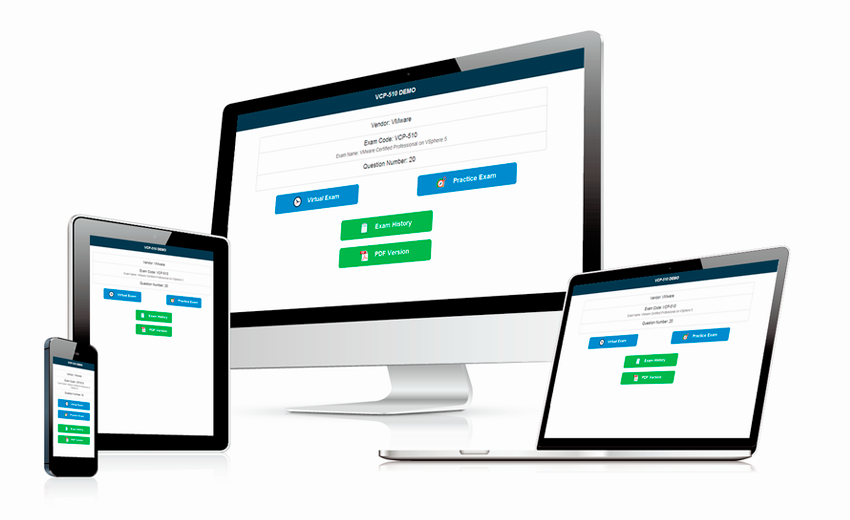
Stimulate the real exam
Our C_TS452_2601 study practice guide boosts the function to stimulate the real exam. The clients can use our software to stimulate the real exam to be familiar with the speed, environment and pressure of the real C_TS452_2601 exam and get a well preparation for the real exam. Under the virtual exam environment the clients can adjust their speeds to answer the C_TS452_2601 questions, train their actual combat abilities and be adjusted to the pressure of the real test. They can also have an understanding of their mastery degree of our C_TS452_2601 study practice guide. The clients can use our software to stimulate the real exam at any time and there are no limits for the times of stimulation.
Save time
Our C_TS452_2601 useful test guide materials present the most important information to the clients in the simplest way so our clients need little time and energy to learn our C_TS452_2601 useful test guide. The clients only need 20-30 hours to learn and prepare for the test. For those people who are busy in their jobs, learning or other things this is a good news because they needn't worry too much that they don't have enough time to prepare for the test and can leisurely do their main things and spare little time to learn our C_TS452_2601 study practice guide. So it is a great advantage of our SAP Certified - SAP S/4HANA Cloud Private Edition, Sourcing and Procurement exam materials and a great convenience for the clients.
Free trials
Before the clients purchase our C_TS452_2601 study practice guide, they can have a free trial freely. The clients can log in our company's website and visit the pages of our products. The pages of our products lists many important information about our SAP Certified - SAP S/4HANA Cloud Private Edition, Sourcing and Procurement exam materials and they include the price, version and updated time of our products, the exam name and code, the total amount of the questions and answers, the merits of our C_TS452_2601 useful test guide and the discounts. You can have a comprehensive understanding of our C_TS452_2601 useful test guide after you see this information. Then you can look at the free demos and try to answer them to see the value of our SAP Certified - SAP S/4HANA Cloud Private Edition, Sourcing and Procurement exam materials and finally decide to buy them or not.
SAP C_TS452_2601 Exam Syllabus Topics:
| Section | Objectives |
|---|---|
| Topic 1: Sourcing and Procurement Overview | - Procurement cycle in SAP S/4HANA - Sourcing strategies and processes |
| Topic 2: Operational Procurement | - Goods receipt process - Invoice verification (Logistics Invoice Verification) |
| Topic 3: Reporting and Analytics | - Embedded analytics in SAP S/4HANA - Standard procurement reports |
| Topic 4: Supplier Management and Evaluation | - Performance management for suppliers - Supplier evaluation processes |
| Topic 5: Purchasing Processes | - Purchase order creation and processing - Contracts and scheduling agreements - Purchase requisition processing |
| Topic 6: Valuation and Account Determination | - Automatic account determination - Material valuation |
| Topic 7: Master Data in Procurement | - Purchasing info records and source lists - Material master data - Business Partner concept |
| Topic 8: Inventory Management | - Goods movements and transfers - Stock types and special stocks |
SAP Certified - SAP S/4HANA Cloud Private Edition, Sourcing and Procurement Sample Questions:
1. <strong>CHALLENGE 3 — Organizational Routing Discipline for External Processing Purchases</strong> During retesting, one plant can progress subcontracting-related procurement fast enough only after local staff narrow the intended routing and control pattern. The central sourcing office wants remediation to confirm one common structure before the next rollout wave. What is the best validation decision?
A) Remove external-processing scenarios from remediation validation and review them after promotion
B) Let each plant define its own routing path for subcontracting and service-linked procurement during the next rollout
C) Recheck whether external-processing response remains workable under restored common routing before accepting local deviation
D) Keep the locally narrowed routing because seasonal supplier readiness should always outweigh shared control behavior
2. A regional construction-supplies distributor is onboarding a newly centralized procurement office into SAP S/4HANA Cloud Private Edition after closing a legacy branch purchasing tool. Material masters, supplier records, and standard purchasing settings have been migrated. Buyers can create purchase orders for most product groups successfully. However, for one family of bulk aggregate materials, the system consistently ignores the intended preferred supplier arrangement for the new office and instead proposes an alternate source. In an already stabilized procurement office using the same shared model, the preferred supplier is proposed correctly for comparable materials.
The rollout sponsor wants the issue corrected before the legacy purchasing tool is decommissioned. Buyers must not manually override suppliers, and no custom rule may be introduced because the same onboarding template will be used for two more offices.
What should the consultant check first?
A) Recreate the relevant purchase requisitions because wrong supplier proposals usually start with requester-side data inconsistency.
B) Ask buyers to continue using the alternate supplier until the new office completes its first procurement cycle.
C) Verify whether the new procurement office has the required organizational and master-data assignments for the intended preferred-supplier arrangement to participate in standard source determination.
D) Add a temporary custom rule that forces the preferred supplier for aggregate materials until rollout is complete.
3. <strong>CHALLENGE 1 — Property Assignment Consistency for Shared Purchasing Execution</strong> During UAT, a beach resort and a city hotel process comparable replenishment demand for room-supply materials under the shared procurement template. Both properties create purchasing documents successfully, but one property later requires local correction to keep downstream handling aligned with the expected path. The deployment office wants a result that remains reusable across the next property wave.
What is the best first validation action?
A) Allow the affected property to continue using local correction until cluster sign-off is complete
B) Move all room-supply replenishment to one property type until UAT is complete
C) Compare how property-assignment preparation was applied for the representative scenarios before changing downstream handling
D) Shorten release handling for the affected material set so both properties can move demand more quickly
4. A catering-services company is validating procurement of consumable kitchen supplies in SAP S/4HANA Cloud Private Edition for a newly introduced replenishment category. Requesters can create purchase requisitions in SAP Fiori, approvals complete successfully, and buyers can select the approved items for conversion. For most consumable categories, purchase orders are created and proceed into the expected downstream process. However, for one disposable-supplies category, the conversion stops because the follow-on item does not receive the required processing control for standard purchase-order handling.
The same buyers can convert similar requisitions for another category in the same purchasing organization without issue. The rollout lead wants the issue corrected before the next automated validation cycle. Buyers must not use workaround document types, and the fix must remain standard because the same configuration pattern will be reused for later category activation.
What should the consultant check first?
A) Rebuild requisition approval because approved demand should always move into the correct purchase-order processing state.
B) Verify whether the affected disposable-supplies category is correctly linked to the downstream item-processing and purchasing-document determination settings.
C) Ask buyers to use a temporary alternative purchasing document for the disposable-supplies category until rollout is complete.
D) Broaden buyer authorization so the blocked conversion can bypass the missing follow-on processing control.
5. A procurement implementation team is running final regression validation in SAP S/4HANA Cloud Private Edition after importing a controlled transport set into pre-production. Business users can still complete requisitioning and purchase-order creation manually in SAP Fiori. However, one regression package that validates approval execution fails because the expected approval task is no longer routed to the target test users, even though the workflow itself appears active and a similar approval package still works for a comparable business role.
The issue started after a transport that included workflow-related configuration and role-scope adjustments. The release manager wants a targeted correction before sign-off. Broadly reopening access is not allowed, and the production role model must remain audit-ready under lifecycle governance.
Which action should the consultant take first?
A) Compare the transported workflow recipient determination and the deployed role-scope assignments for the affected approval package.
B) Mark the failed package as low priority because other approval scenarios are still working in the same environment.
C) Recreate the test requisitions because approval-routing issues usually start with incorrect business-user input during document creation.
D) Restore the previous broader approval role temporarily so the missing tasks reappear for all affected users before sign-off.
Solutions:
| Question # 1 Answer: C | Question # 2 Answer: C | Question # 3 Answer: C | Question # 4 Answer: B | Question # 5 Answer: A |


 Jacob
Jacob 
 Mark
Mark  Atwood
 Clementine
  Ives
Ives 
 Nicole
  Tom
Tom  Melissa
  Mike
Mike  Elton
Elton  Florence
  Jennifer
  Murphy


