


LatestCram never stopped refining the C_TS452 collection, and it shows: 200 practice questions with verified answers, three versions for different habits, and a service team that answers when you write.
SAP C_TS452 Exam Syllabus Topics:
| Section | Objectives |
|---|---|
| Inventory Management | - Stock types and special stocks - Goods movements and transfers |
| Purchasing Processes | - Purchase order creation and processing - Contracts and scheduling agreements - Purchase requisition processing |
| Valuation and Account Determination | - Automatic account determination - Material valuation |
| Supplier Management and Evaluation | - Performance management for suppliers - Supplier evaluation processes |
| Operational Procurement | - Invoice verification (Logistics Invoice Verification) - Goods receipt process |
| Master Data in Procurement | - Material master data - Business Partner concept - Purchasing info records and source lists |
| Sourcing and Procurement Overview | - Procurement cycle in SAP S/4HANA - Sourcing strategies and processes |
| Reporting and Analytics | - Embedded analytics in SAP S/4HANA - Standard procurement reports |
SAP Certified - SAP S/4HANA Cloud Private Edition, Sourcing and Procurement Exam: Common Questions
SAP recommends these training resources for the SAP Certified - SAP S/4HANA Cloud Private Edition, Sourcing and Procurement exam:
Follow the training with steady self-testing — the 200 practice questions from LatestCram help you apply theory and fill any gaps the training leaves.
The SAP Certified - SAP S/4HANA Cloud Private Edition, Sourcing and Procurement exam contains 80 to complete within 180 minutes. Timed simulation in the LatestCram Desktop Test Engine teaches that rhythm before exam day does.
The official SAP Certified - SAP S/4HANA Cloud Private Edition, Sourcing and Procurement outline defines 8 domains. The leading three are Valuation and Account Determination, Reporting and Analytics, and Supplier Management and Evaluation. The full list is in the topics section above, and LatestCram's 200 practice questions cover each one.
The C_TS452 exam is a SAP certification exam validating the SAP Certified - SAP S/4HANA Cloud Private Edition, Sourcing and Procurement syllabus shown above. It belongs to these credential paths: SAP Certified Associate - SAP S/4HANA Sourcing and Procurement (previous versions). Earning the credential in 2026 can strengthen a career, and LatestCram prepares candidates with 200 practice questions in PDF, Desktop Test Engine, and Online Test Engine formats.
Online proctored exam or test center delivery via SAP Certification platform Register for the SAP Certified - SAP S/4HANA Cloud Private Edition, Sourcing and Procurement exam through these official channels:
After booking, LatestCram delivers your practice questions within 1 minute — preparation starts the same day.
The SAP Certified - SAP S/4HANA Cloud Private Edition, Sourcing and Procurement exam requires 65% to pass, and registration costs USD 560 (approx.). A failed attempt means paying the same fee again — a readiness check with the LatestCram engines before booking is the cheaper option.
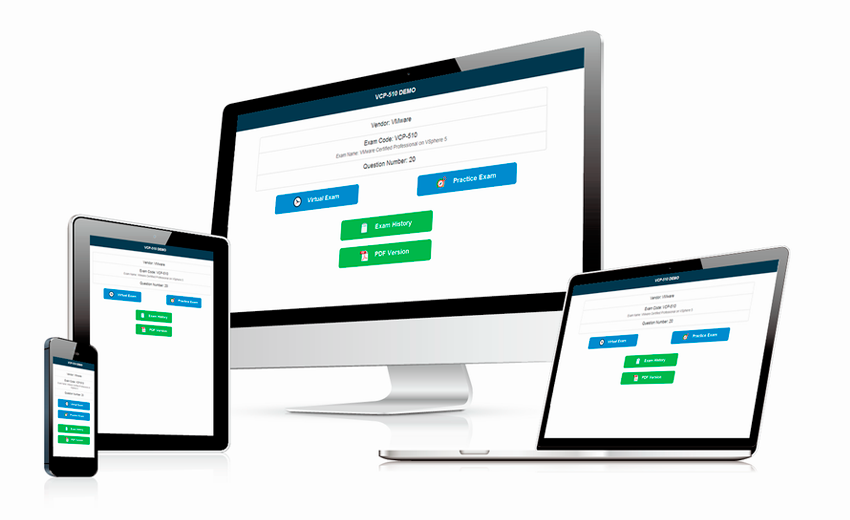
Three versions of the same study materials: a printable, expert-prepared PDF with free demo download and instant access; a Desktop Test Engine for Windows that simulates the real exam with two practice modes and works offline; and an Online Test Engine for any browser on Windows, Mac, Android, and iOS with test history and performance review. Download the demo first, experience the materials, and choose the format you like best — all 200 practice questions are identical across versions. Every purchase includes 365 days of free updates, a 50% renewal discount afterward, and unlimited computer installations.
LatestCram issues a full refund if you take the SAP Certified - SAP S/4HANA Cloud Private Edition, Sourcing and Procurement exam within 60 days of purchase and do not pass. The policy does not apply if the exam is taken within 3 days of purchase, if the exam was never actually taken, or to free materials or expired orders, and the candidate name must match the payer name. Submit a scan of your enrollment slip and the official Score Report PDF within 2 days of the exam; claims are processed within 7 days. Alternatively, exchange for two free exam products of equal value and keep your original update service. Orders arrive by email within 1 minute — contact support if nothing arrives within 2 hours.
Basic knowledge of procurement processes and SAP S/4HANA recommended; no strict mandatory prerequisites. Since requirements change over time, confirm the latest on the official SAP exam page before scheduling.
SAP Certified - SAP S/4HANA Cloud Private Edition, Sourcing and Procurement Sample Questions:
<strong>CHALLENGE 3 — Vendor Role Boundaries Across Service and Material Demand</strong> The commercial lead wants service-related suppliers and material suppliers to remain clearly separated so shared support and close review stay predictable. A depot operations lead wants convenience to guide supplier usage during the first close because that seems faster. Which option is most appropriate?
- A. Let convenience determine supplier usage because first-close operational speed outweighs supplier-role discipline
- B. Postpone vendor-role validation until receipt-to-invoice consistency testing is complete
- C. Preserve the intended vendor role boundaries and verify whether they remain stable under representative mixed depot demand
- D. Allow each depot to decide when service-related suppliers can be used in material purchasing
Correct Answer: C 🗳️
Explanation: Only visible for LatestCram members. You can sign-up / login (it's free).
<strong>CHALLENGE 3 — Account Assignment Boundaries for Laboratory Project Procurement</strong> A laboratory upgrade scenario includes a project-linked service purchase and related material demand. Both documents can be created, but one site later processes the demand as if it were routine operational procurement rather than project-linked activity. The design intent is to keep project demand distinguishable across entities. What is the best first validation action?
- A. Remove laboratory project scenarios from the shared test scope and validate only routine procurement first
- B. Compare account-assignment preparation, purchasing-intent assumptions, and downstream handling expectations for the representative project scenario across sites
- C. Allow local users to decide whether the demand should be treated as project-linked or routine until the rollout stabilizes
- D. Reduce approval handling for all project-linked purchases so they progress more like routine operational demand
Correct Answer: B 🗳️
Explanation: Only visible for LatestCram members. You can sign-up / login (it's free).
A paper-products manufacturer is validating consignment procurement in SAP S/4HANA Cloud Private Edition after moving the process from a locally managed workaround into the shared procurement template. Buyers can create the expected purchasing documents, and warehouse users can post the initial stock movements successfully. However, when the team tests the follow-on liability recognition step for one plant, the system produces a validation error for the affected consignment materials, while the same process works in another plant using the same material category. Recent transport activity included plant-dependent settings for procurement-related valuation and posting behavior.
The implementation manager wants the issue corrected before the next plant onboarding. Manual finance journals are not allowed, and the team must keep the standard process intact because future plants will inherit the same template under clean core governance.
Which action is the most appropriate first step?
- A. Ask finance to post the affected liability entries manually until the remaining plants complete template adoption.
- B. Grant broader warehouse and finance roles so the liability-recognition validation can complete without restriction.
- C. Check whether the plant-dependent valuation and account-determination settings are correctly aligned for the affected consignment scenario.
- D. Recreate the consignment purchasing documents because validation errors after stock movement usually begin with buyer-side entry defects.
Correct Answer: C 🗳️
Explanation: Only visible for LatestCram members. You can sign-up / login (it's free).
<strong>CHALLENGE 3 — Account Assignment Boundaries for Laboratory Project Procurement</strong> During retesting, the team observes that one partial correction makes project demand easier to process but still leaves follow-on handling inconsistent. Only when account assignment, approval expectation, and purchasing-intent setup are aligned together does downstream behavior remain stable across sites. What does this most strongly indicate?
- A. The original issue was minor because documents could always be created
- B. The template should stop distinguishing project-linked procurement from routine demand
- C. The main problem was invoice handling, so upstream setup should not be the focus
- D. The issue reflects a layered dependency in which project-boundary stability depends on more than one upstream preparation area
Correct Answer: D 🗳️
Explanation: Only visible for LatestCram members. You can sign-up / login (it's free).
<strong>CHALLENGE 4 — Receipt and Invoice Interpretability for Deployment Promotion</strong> During promotion-readiness validation, one site shows stable invoice behavior for a confirmed raw-material delivery, while another site shows harder-to-interpret invoice outcomes for a comparable procurement case. Reviewers find that the weaker case was prepared under different purchasing, confirmation, and demand-qualification assumptions. What is the best next action?
- A. Increase invoice-processing targets so both sites complete more transactions before comparison
- B. Shift invoice handling to local finance users so the weaker cases can be resolved more quickly
- C. Ignore site-level variation and validate only whether the total invoice volume reaches target
- D. Align upstream purchasing, confirmation, and demand-qualification assumptions, then repeat representative receipt-to-invoice cases
Correct Answer: D 🗳️
Explanation: Only visible for LatestCram members. You can sign-up / login (it's free).
Viewing page 1 out of 40 pages.
Viewing questions 1-5 out of 200 questions.


 Matthew

 Porter

 Betty
 Dana
 Dick
 Kyle
 Uriah
 Bishop
 Veromca

 Steven
 Julian


