


Free trials
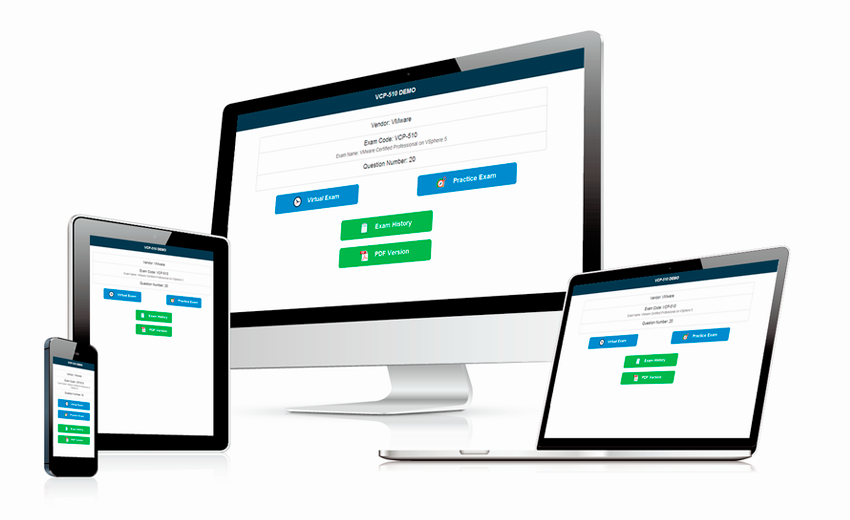
Before the clients purchase our BPS-Pharmacotherapy study practice guide, they can have a free trial freely. The clients can log in our company's website and visit the pages of our products. The pages of our products lists many important information about our Pharmacotherapy (Part1 and Part2) Exam exam materials and they include the price, version and updated time of our products, the exam name and code, the total amount of the questions and answers, the merits of our BPS-Pharmacotherapy useful test guide and the discounts. You can have a comprehensive understanding of our BPS-Pharmacotherapy useful test guide after you see this information. Then you can look at the free demos and try to answer them to see the value of our Pharmacotherapy (Part1 and Part2) Exam exam materials and finally decide to buy them or not.
Stimulate the real exam
Our BPS-Pharmacotherapy study practice guide boosts the function to stimulate the real exam. The clients can use our software to stimulate the real exam to be familiar with the speed, environment and pressure of the real BPS-Pharmacotherapy exam and get a well preparation for the real exam. Under the virtual exam environment the clients can adjust their speeds to answer the BPS-Pharmacotherapy questions, train their actual combat abilities and be adjusted to the pressure of the real test. They can also have an understanding of their mastery degree of our BPS-Pharmacotherapy study practice guide. The clients can use our software to stimulate the real exam at any time and there are no limits for the times of stimulation.
Save time
Our BPS-Pharmacotherapy useful test guide materials present the most important information to the clients in the simplest way so our clients need little time and energy to learn our BPS-Pharmacotherapy useful test guide. The clients only need 20-30 hours to learn and prepare for the test. For those people who are busy in their jobs, learning or other things this is a good news because they needn't worry too much that they don't have enough time to prepare for the test and can leisurely do their main things and spare little time to learn our BPS-Pharmacotherapy study practice guide. So it is a great advantage of our Pharmacotherapy (Part1 and Part2) Exam exam materials and a great convenience for the clients.
Our world is in the state of constant change and evolving. If you want to keep pace of the time and continually transform and challenge yourself you must attend one kind of BPS certificate test to improve your practical ability and increase the quantity of your knowledge. Buying our BPS-Pharmacotherapy study practice guide can help you pass the test smoothly. Our Pharmacotherapy (Part1 and Part2) Exam exam materials have gone through strict analysis and verification by senior experts and are ready to supplement new resources at any time. We try our best to present you the most useful and efficient information about the test and provide multiple functions and intuitive methods to help the clients learn efficiently. Learning our BPS-Pharmacotherapy useful test guide costs you little time and energy. The passing rate and hit rate are both high thus you will encounter few obstacles to pass the test. You can further understand our BPS-Pharmacotherapy study practice guide after you read the introduction as follow.

BPS BPS-Pharmacotherapy Exam Syllabus Topics:
| Section | Weight | Objectives |
|---|---|---|
| Topic 1: Healthcare Systems and Population Health | 10% | - Population-based pharmacotherapy - Healthcare delivery models - Medication safety and quality improvement - Regulatory and economic considerations |
| Topic 2: Application of Evidence to Practice and Education | 25% | - Clinical research and guideline development - Literature evaluation and biostatistics - Patient education and counseling - Drug information and communication |
| Topic 3: Patient-Centered Pharmacotherapy | 65% | - Pathophysiology and clinical presentation - Therapeutic guidelines and evidence-based treatment - Adverse drug reactions and interactions - Drug selection, dosing, and monitoring - Pharmacokinetics and pharmacodynamics |
BPS Pharmacotherapy (Part1 and Part2) Sample Questions:
A hospital requests a policy and procedure document for the monitoring and reporting of significant adverse drug reactions. Which agency requires a policy for the reporting of adverse drug reactions by hospitals?
- A. Institute for Safe medication Practices
- B. Food and Drug Administration
- C. Joint Commission
- D. National Committee for Quality Assurance
A 47-year-old patient with cirrhosis, ascites, and acute renal failure presents to the emergency department. A peritoneal tap reveals spontaneous bacterial peritonitis (neutrophils = 789 in the ascitic fluid). Medical history includes ethanol abuse and positivity for HCV antibody. What is the most appropriate drug therapy for this patient?
- A. Levofloxacin With dextran 40
- B. Cefotaxime with albumin
- C. Gentamicin With albumin
- D. Piperacillin/tazobactam with dextran 40
The pharmacotherapy specialist-directed research team in a large healthcare system plans to submit a comparative effectiveness study proposal in response to the request for proposals released under the Patient Protection and Affordable Care Act. In designing this study, which category of outcomes should be used for the primary endpoint?
- A. Cost savings
- B. Surrogate markers
- C. Patient-centered health
- D. Cost-effectiveness
A 72-year-old patient, weighing 72 kg and measuring 173 cm tall, presents to the emergency department with an acute ischemic stroke. The symptoms have been present for just over an hour. The patient has a history of hypertension and is currently taking lisinopril 10 mg daily.
The patient's evaluation reveals no intracerebral hemorrhaging. The current BP is 178/100 mm Hg. It is now 150 minutes from stroke symptom onset.
Which of the following should now be administered?
- A. An antihypertensive; reconsider intra-arterial thrombolytics once BP decreases
- B. An antihypertensive; reconsider intravenous t-PA once BP decreases
- C. Intravenous glycoprotein IIb/IIIa inhibitor
- D. Intravenous-PA
After the first intravenous bolus dose of a drug, the peak concentration is 50 mcg/mL, the elimination rate constant is 0.3/h, and the dosage Interval is 6 hours. Assuming a one compartment model and intravenous bolus injection, which of the following will be the peak concentration following the second dose?
- A. 75 mcg/mL
- B. 64 mcg/mL
- C. 58 mcg/mL
- D. 50mcg/mL


 Cora
Cora 
 Eden
Eden 
 Nancy
Nancy 
 Payne
Payne  Matt
Matt  Isaac
Isaac  Ternence
  Armstrong
  Xaviera
  Georgia
  Sidney
  Queena
  Merle
Merle  May
May  Aurora
  Will
Will  Winston
  Tobey
Tobey  Hamiltion
  Iris
Iris 


