


Stimulate the real exam
Our 300-101 study practice guide boosts the function to stimulate the real exam. The clients can use our software to stimulate the real exam to be familiar with the speed, environment and pressure of the real 300-101 exam and get a well preparation for the real exam. Under the virtual exam environment the clients can adjust their speeds to answer the 300-101 questions, train their actual combat abilities and be adjusted to the pressure of the real test. They can also have an understanding of their mastery degree of our 300-101 study practice guide. The clients can use our software to stimulate the real exam at any time and there are no limits for the times of stimulation.
Our world is in the state of constant change and evolving. If you want to keep pace of the time and continually transform and challenge yourself you must attend one kind of Cisco certificate test to improve your practical ability and increase the quantity of your knowledge. Buying our 300-101 study practice guide can help you pass the test smoothly. Our Implementing Cisco IP Routing exam materials have gone through strict analysis and verification by senior experts and are ready to supplement new resources at any time. We try our best to present you the most useful and efficient information about the test and provide multiple functions and intuitive methods to help the clients learn efficiently. Learning our 300-101 useful test guide costs you little time and energy. The passing rate and hit rate are both high thus you will encounter few obstacles to pass the test. You can further understand our 300-101 study practice guide after you read the introduction as follow.

Save time
Our 300-101 useful test guide materials present the most important information to the clients in the simplest way so our clients need little time and energy to learn our 300-101 useful test guide. The clients only need 20-30 hours to learn and prepare for the test. For those people who are busy in their jobs, learning or other things this is a good news because they needn't worry too much that they don't have enough time to prepare for the test and can leisurely do their main things and spare little time to learn our 300-101 study practice guide. So it is a great advantage of our Implementing Cisco IP Routing exam materials and a great convenience for the clients.
Cisco 300-101 Exam Topics:
| Section | Weight | Objectives |
|---|---|---|
| VPN Technologies | 10% | 1 Configure and verify GRE 2 Describe DMVPN (single hub) 3 Describe Easy Virtual Networking (EVN) |
| Layer 2 Technologies | 10% | 1 Configure and verify PPP a) Authentication (PAP, CHAP) b)PPPoE (client side only) 2 Explain Frame Relay a) Operations b) Point-to-point c)Multipoint |
| Infrastructure Services | 20% | 1 Configure and verify device management a) Console and VTY b) Telnet, HTTP, HTTPS, SSH, SCP c) (T)FTP 2 Configure and verify SNMP a)v2 b)v3 3 Configure and verify logging a) Local logging, syslog, debugs, conditional debugs b)Timestamps 4 Configure and verify Network Time Protocol (NTP) a)NTP master, client, version 3, version 4 b)NTP authentication 5 Configure and verify IPv4 and IPv6 DHCP a)DHCP client, IOS DHCP server, DHCP relay b)DHCP options (describe) 6 Configure and verify IPv4 Network Address Translation (NAT) a) Static NAT, dynamic NAT, PAT 7 Describe IPv6 NAT a)NAT64 b)NPTv6 8 Describe SLA architecture 9 Configure and verify IP SLA a)ICMP 10 Configure and verify tracking objects a) Tracking objects b) Tracking different entities (for example, interfaces, IPSLA results) 11 Configure and verify Cisco NetFlow a)NetFlow v5, v9 b) Local retrieval c) Export (configuration only) |
| Infrastructure Security | 10% | 1 Describe IOS AAA using local database 2 Describe device security using IOS AAA with TACACS+ and RADIUS a AAA with TACACS+ and RADIUS b Local privilege authorization fallback 3 Configure and verify device access control a Lines (VTY, AUX, console) b Management plane protection c Password encryption 4 Configure and verify router security features a IPv4 access control lists (standard, extended, time-based) b IPv6 traffic filter c Unicast reverse path forwarding |
| Network Principles | 10% | 1 Identify Cisco Express Forwarding concepts a) FIB b) Adjacency table 2 Explain general network challenges a)Unicast b) Out-of-order packets c) Asymmetric routing 3 Describe IP operations a)ICMP Unreachable and Redirects b)IPv4 and IPv6 fragmentation c)TTL 4 Explain TCP operations a)IPv4 and IPv6 (P)MTU b)MSS c) Latency d) Windowing e) Bandwidth-delay product f) Global synchronization 5 Describe UDP operations a) Starvation b) Latency 6 Recognize proposed changes to the network a) Changes to routing protocol parameters b) Migrate parts of the network to IPv6 c) Routing protocol migration |
| Layer 3 Technologies | 40% | 1 Identify, configure, and verify IPv4 addressing and subnetting a) Address types (Unicast, broadcast, multicast, and VLSM) b) ARP c)DHCP relay and server d)DHCP protocol operations 2 Identify IPv6 addressing and subnetting a)Unicast b)EUI-64 c) ND, RS/RA d)Autoconfig (SLAAC) e)DHCP relay and server f)DHCP protocol operations 3 Configure and verify static routing 4 Configure and verify default routing 5 Evaluate routing protocol types a) Distance vector b) Link state c) Path vector 6 Describe administrative distance 7 Troubleshoot passive interfaces 8 Configure and verify VRF lite 9 Configure and verify filtering with any protocol 10 Configure and verify redistribution between any routing protocols or routing sources 11 Configure and verify manual and autosummarization with any routing protocol 12 Configure and verify policy-based routing 13 Identify suboptimal routing 14 Explain ROUTE maps 15 Configure and verify loop prevention mechanisms a) Route tagging and filtering b) Split-horizon c) Route poisoning 16 Configure and verify RIPv2 17 Describe RIPng 18 Describe EIGRP packet types 19 Configure and verify EIGRP neighbor relationship and authentication 20 Configure and verify EIGRP stubs 21 Configure and verify EIGRP load balancing a) Equal cost b) Unequal cost 22 Describe and optimize EIGRP metrics 23 Configure and verify EIGRP for IPv6 24 Describe OSPF packet types 25 Configure and verify OSPF neighbor relationship and authentication 26 Configure and verify network types, area types, and router types a) Point-to-point, multipoint, broadcast, nonbroadcast b)LSA types, area type: backbone, normal, transit, stub, NSSA, totally stub c) Internal router, backbone router, ABR, ASBR d) Virtual link 27 Configure and verify OSPF path preference 28 Configure and verify OSPF operations 29 Configure and verify OSPF for IPv6 30 Describe, configure, and verify BGP peer relationships and authentication a) Peer group b) Active, passive c) States and timers 31 Configure and verify eBGP (IPv4 and IPv6 address families) a)eBGP b) 4-byte AS number c) Private AS 32 Explain BGP attributes and best-path selection |
Reference: http://www.cisco.com/c/en/us/training-events/training-certifications/exams/current-list/route2.html
What is the cost of CISCO 300-101
The cost of CISCO 300-101 is $250.
- Length of Examination: 90 minutes
- Format: Multiple choices, multiple answers
- Number of Questions: 60-70
Free trials
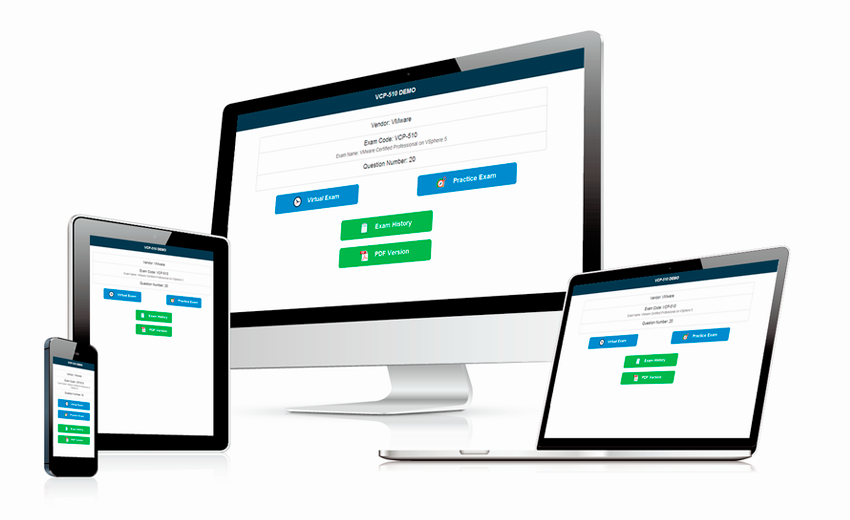
Before the clients purchase our 300-101 study practice guide, they can have a free trial freely. The clients can log in our company's website and visit the pages of our products. The pages of our products lists many important information about our Implementing Cisco IP Routing exam materials and they include the price, version and updated time of our products, the exam name and code, the total amount of the questions and answers, the merits of our 300-101 useful test guide and the discounts. You can have a comprehensive understanding of our 300-101 useful test guide after you see this information. Then you can look at the free demos and try to answer them to see the value of our Implementing Cisco IP Routing exam materials and finally decide to buy them or not.


 Eric
Eric 
 Werner
  Noel
Noel  Hyman
Hyman 
 Zachary
  Leif
Leif  Ogden
Ogden 
 Kerwin
  Rock
Rock  Lambert
  Camille
  Hayden
  Beacher
  Susan
Susan  Gordon
  Marico
  Roy
Roy  Quintina


