


Save time
Our C1000-168 useful test guide materials present the most important information to the clients in the simplest way so our clients need little time and energy to learn our C1000-168 useful test guide. The clients only need 20-30 hours to learn and prepare for the test. For those people who are busy in their jobs, learning or other things this is a good news because they needn't worry too much that they don't have enough time to prepare for the test and can leisurely do their main things and spare little time to learn our C1000-168 study practice guide. So it is a great advantage of our IBM Cloud Pak for Data v4.6 Administrator exam materials and a great convenience for the clients.
Our world is in the state of constant change and evolving. If you want to keep pace of the time and continually transform and challenge yourself you must attend one kind of IBM certificate test to improve your practical ability and increase the quantity of your knowledge. Buying our C1000-168 study practice guide can help you pass the test smoothly. Our IBM Cloud Pak for Data v4.6 Administrator exam materials have gone through strict analysis and verification by senior experts and are ready to supplement new resources at any time. We try our best to present you the most useful and efficient information about the test and provide multiple functions and intuitive methods to help the clients learn efficiently. Learning our C1000-168 useful test guide costs you little time and energy. The passing rate and hit rate are both high thus you will encounter few obstacles to pass the test. You can further understand our C1000-168 study practice guide after you read the introduction as follow.

Stimulate the real exam
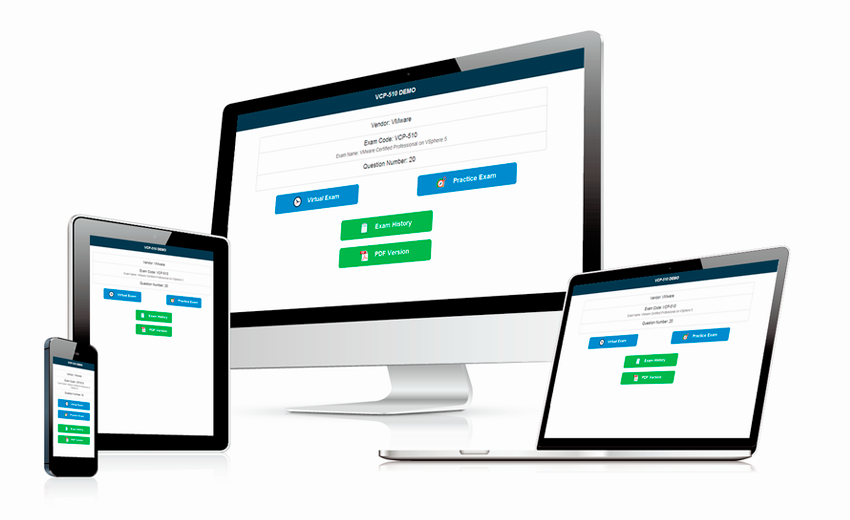
Our C1000-168 study practice guide boosts the function to stimulate the real exam. The clients can use our software to stimulate the real exam to be familiar with the speed, environment and pressure of the real C1000-168 exam and get a well preparation for the real exam. Under the virtual exam environment the clients can adjust their speeds to answer the C1000-168 questions, train their actual combat abilities and be adjusted to the pressure of the real test. They can also have an understanding of their mastery degree of our C1000-168 study practice guide. The clients can use our software to stimulate the real exam at any time and there are no limits for the times of stimulation.
Free trials
Before the clients purchase our C1000-168 study practice guide, they can have a free trial freely. The clients can log in our company's website and visit the pages of our products. The pages of our products lists many important information about our IBM Cloud Pak for Data v4.6 Administrator exam materials and they include the price, version and updated time of our products, the exam name and code, the total amount of the questions and answers, the merits of our C1000-168 useful test guide and the discounts. You can have a comprehensive understanding of our C1000-168 useful test guide after you see this information. Then you can look at the free demos and try to answer them to see the value of our IBM Cloud Pak for Data v4.6 Administrator exam materials and finally decide to buy them or not.
IBM C1000-168 Exam Syllabus Topics:
| Section | Weight | Objectives |
|---|---|---|
| OpenShift Cluster Administration | 13% | - Node and pod scheduling - Cluster health and capacity - Operator and workload management - Resource quotas and limits |
| Security and Access Control | 10% | - Certificate and secret management - Authentication and SSO integration - User and role management - Audit logging and compliance |
| Monitoring, Logging and Troubleshooting | 17% | - Monitoring tools and dashboards - Log aggregation and analysis - Issue diagnosis and resolution - Performance tuning |
| Installation and Configuration | 12% | - Integrating with foundational services - Storage and network configuration - Installing Cloud Pak for Data - Service provisioning |
| Planning and Architecture | 13% | - Platform architecture and components - Deployment models (online / air-gapped) - Pre-installation requirements and sizing - Multi-tenancy and namespace design |
| Platform and Service Administration | 22% | - Backup and restore strategy - High availability and disaster recovery - Lifecycle management - Managing projects and services |
| Upgrading and Patching | 13% | - Upgrade planning and validation - Performing platform and service upgrades - Rollback procedures - Patch management |
IBM Cloud Pak for Data v4.6 Administrator Sample Questions:
1. How does configuring auditing enhance the security and compliance posture of the Cloud Pak for Data platform?
A) It allows users to delete logs of their activities.
B) By automating the response to detected threats based on audit logs.
C) Auditing is primarily for performance monitoring, not security or compliance.
D) By providing a detailed record of all user activities for forensic analysis.
2. What is the recommended approach to patching Cloud Pak for Data services to ensure minimal disruption?
A) Patching without prior testing to expedite the process.
B) Patching services one at a time, starting with the least critical.
C) Scheduling patches during the system's least active hours.
D) Patching all services simultaneously to reduce the maintenance window.
3. Why is it necessary to create projects in OpenShift before deploying Cloud Pak for Data?
A) Each project provides isolated environments for different parts of Cloud Pak for Data.
B) They enable the OpenShift cluster to allocate resources more efficiently.
C) Projects automatically configure network policies for security.
D) Projects are required for billing and chargeback purposes.
4. Which statement is true about pod affinity/anti-affinity when running Cloud Pak for Data on OpenShift?
A) Pod affinity prevents the scheduler from locating a new pod on the same node as other pods if the label selector on the new pod matches the label on the current pod.
B) Pod affinity and pod anti-affinity allow for specifying rules about how pods should be placed relative to other pods.
C) Pod anti-affinity allows the scheduler to locate a new pod on the same node as pods with the same labels if the label selector on the new pod matches the label on the current pod.
D) There are two types of pod affinity rules: distributed and local.
5. What are the steps to install Cloud Pak for Data platform and services online?
A) Manually downloading each service package and installing them via the OpenShift console.
B) Using the Cloud Pak for Data CLI to install the platform, followed by individual services.
C) Configuring each service individually before starting the platform installation.
D) Running a single command that automatically detects and installs all services.
Solutions:
| Question # 1 Answer: D | Question # 2 Answer: B,C | Question # 3 Answer: A | Question # 4 Answer: B | Question # 5 Answer: B |


 Cora
Cora 
 Phil
Phil  Bartholomew
 Francis
  Gordon
 Gabrielle
  Barry
Barry  Nat
Nat  Arabela
  Honey
Honey  Sandy
Sandy  Yehudi
  Breenda
  Barnett
  Tyrone
  Joseph
  Sara
Sara  Julian
  Rosalind
  Monroe
  Kitty
Kitty  Ron
Ron 


