


Free trials
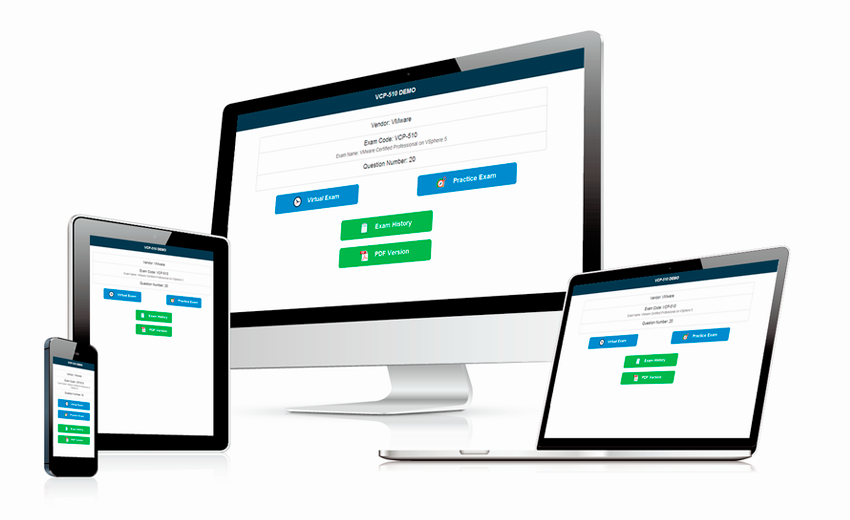
Before the clients purchase our SEND study practice guide, they can have a free trial freely. The clients can log in our company's website and visit the pages of our products. The pages of our products lists many important information about our Endocrinology and Diabetes (Specialty Certificate Examination) exam materials and they include the price, version and updated time of our products, the exam name and code, the total amount of the questions and answers, the merits of our SEND useful test guide and the discounts. You can have a comprehensive understanding of our SEND useful test guide after you see this information. Then you can look at the free demos and try to answer them to see the value of our Endocrinology and Diabetes (Specialty Certificate Examination) exam materials and finally decide to buy them or not.
Save time
Our SEND useful test guide materials present the most important information to the clients in the simplest way so our clients need little time and energy to learn our SEND useful test guide. The clients only need 20-30 hours to learn and prepare for the test. For those people who are busy in their jobs, learning or other things this is a good news because they needn't worry too much that they don't have enough time to prepare for the test and can leisurely do their main things and spare little time to learn our SEND study practice guide. So it is a great advantage of our Endocrinology and Diabetes (Specialty Certificate Examination) exam materials and a great convenience for the clients.
Our world is in the state of constant change and evolving. If you want to keep pace of the time and continually transform and challenge yourself you must attend one kind of MRCPUK certificate test to improve your practical ability and increase the quantity of your knowledge. Buying our SEND study practice guide can help you pass the test smoothly. Our Endocrinology and Diabetes (Specialty Certificate Examination) exam materials have gone through strict analysis and verification by senior experts and are ready to supplement new resources at any time. We try our best to present you the most useful and efficient information about the test and provide multiple functions and intuitive methods to help the clients learn efficiently. Learning our SEND useful test guide costs you little time and energy. The passing rate and hit rate are both high thus you will encounter few obstacles to pass the test. You can further understand our SEND study practice guide after you read the introduction as follow.

Stimulate the real exam
Our SEND study practice guide boosts the function to stimulate the real exam. The clients can use our software to stimulate the real exam to be familiar with the speed, environment and pressure of the real SEND exam and get a well preparation for the real exam. Under the virtual exam environment the clients can adjust their speeds to answer the SEND questions, train their actual combat abilities and be adjusted to the pressure of the real test. They can also have an understanding of their mastery degree of our SEND study practice guide. The clients can use our software to stimulate the real exam at any time and there are no limits for the times of stimulation.
MRCPUK Endocrinology and Diabetes (Specialty Certificate Examination) Sample Questions:
1. An 18-year-old woman presented with a 2-month history of polyuria and polydipsia. She
had been previously fit and well with regular periods. She was not taking any contraception.
Investigations:
serum potassium5.2 mmol/L (3.5-4.9)
serum corrected calcium2.30 mmol/L (2.20-2.60)
serum cortisol (09.00 h)350 nmol/L (200-700)
She went on to have a water deprivation test, the results of which are detailed below.
time (h)serum osmolality (mosmol/kg)urine osmolality (mosmol/kg) normal: 278-300normal: 100-1000 08.3028952 11.3029282 14.30301153 15.30-172
She was then given intramuscular DDAVP@ 2 micrograms at 16.00 h.
time (h)serum osmolality (mosmol/kg)urine osmolality (mosmol/kg) normal: 278-300normal: 100-1000 16.3030017.30-530 18.30-532
Results from an MR scan of pituitary are shown (see image).
What is the most likely diagnosis?
A) psychogenic polydipsia
B) craniopharyngioma
C) non-functioning pituitary adenoma
D) autoimmune (lymphocytic) hypophysitis
E) Rathke's cleft cyst
2. An 18-year-old man was referred with muscle weakness and cramps. His blood pressure was 108/60 mmHg.
Investigations:
serum sodium143 mmol/L (137-144) serum potassium2.4 mmol/L (3.5-4.9) serum bicarbonate32 mmol/L (20-28) serum magnesium0.96 mmol/L (0.75-1.05)
24-h urinary calcium3.6 mmol (2.5-7.5) 24-h urinary magnesium4.2 mmol (2.5-8.0)
plasma renin activity (after 30 min supine)6.4 pmol/mL/h (1.1-2.7) plasma aldosterone (after 30 min supine)680 pmol/L (135-400)
What is the most likely diagnosis?
A) Bartter's syndrome
B) syndrome of apparent mineralocorticoid excess
C) Gitelman's syndrome
D) Liddle's syndrome
E) renal tubular acidosis
3. A 29-year-old woman presented with primary infertility, having had unprotected sexual intercourse for 15 months. Menarche had occurred at the age of 13.5 years. Her menstrual cycle was irregular, occurring every 20-60 days. There was no history of galactorrhoea. She denied abnormal hair growth.
On examination, her body mass index was 28.9 kg/m2 (18-25) and she had normal secondary sexual characteristics. Her visual fields were full to confrontation.
Investigations:
serum androstenedione12.8 nmol/L (0.6-8.8)
serum oestradiol205 pmol/L (200-400)
serum testosterone2.4 nmol/L (0.5-3.0)
serum sex hormone binding globulin23 nmol/L (40-137)
serum follicle-stimulating hormone4.3 U/L (2.5-10.0)
serum luteinising hormone8.5 U/L (2.5-10.0)
serum prolactin420 mU/L (<360)
hysterosalpingogrampatent fallopian tubes
partner's semen analysisnormal sperm count and motility
What is the most appropriate first-line intervention?
A) orlistat
B) cabergoline
C) metformin
D) human chorionic gonadotropin
E) human menopausal gonadotropins
4. A 35-year-old woman was referred with a left lower thyroid lesion. She was asymptomatic.
Examination confirmed the presence of a 2 ? 3-cm, firm, mobile, non-tender mass.
Investigations:
ultrasound-guided fine-needle aspiration biopsyThy 5
How is Thy 5 defined?
A) abnormal, suspicious (but not diagnostic of) malignancy
B) abnormal, diagnostic of malignancy
C) non-diagnostic or inadequate
D) follicular lesions
E) non-neoplastic (consistent with nodular goitre or thyroiditis)
5. A 33-year-old woman presented with tiredness, palpitations, weight loss and emotional
lability 9 weeks after the birth of her third child.
On examination, she had a sinus tachycardia, a fine tremor, slight lid retraction and a mild
diffuse non-tender goitre.
Investigations:
serum thyroid-stimulating hormone<0.01 mU/L (0.4-5.0)
serum free T434.3 pmol/L (10.0-22.0)
technetium-99m scan of thyroid (20-min uptake)<1% (0.4-3.0)
What is the most appropriate treatment?
A) propranolol
B) potassium perchlorate
C) aqueous iodine oral solution
D) propylthiouracil
E) carbimazole
Solutions:
| Question # 1 Answer: D | Question # 2 Answer: A | Question # 3 Answer: C | Question # 4 Answer: B | Question # 5 Answer: A |


 August
 Nelson
 Modesty
  Dunn
Dunn 
 Ian
Ian  Curitis
  Calvin
  Wade
Wade  Nicole
  Sid
Sid  Tiffany
  Maximilian
  Carol
Carol  Ira
Ira 


