Our world is in the state of constant change and evolving. If you want to keep pace of the time and continually transform and challenge yourself you must attend one kind of Microsoft certificate test to improve your practical ability and increase the quantity of your knowledge. Buying our 70-487 study practice guide can help you pass the test smoothly. Our Developing Microsoft Azure and Web Services exam materials have gone through strict analysis and verification by senior experts and are ready to supplement new resources at any time. We try our best to present you the most useful and efficient information about the test and provide multiple functions and intuitive methods to help the clients learn efficiently. Learning our 70-487 useful test guide costs you little time and energy. The passing rate and hit rate are both high thus you will encounter few obstacles to pass the test. You can further understand our 70-487 study practice guide after you read the introduction as follow.

Stimulate the real exam
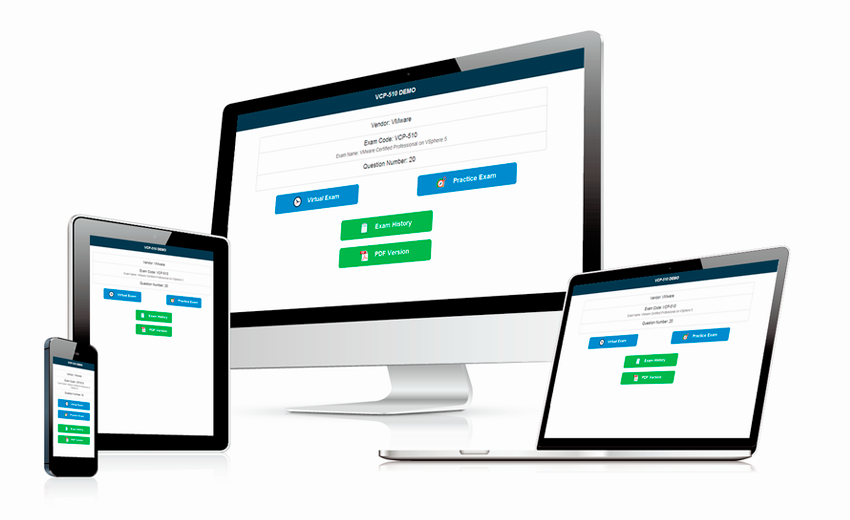
Our 70-487 study practice guide boosts the function to stimulate the real exam. The clients can use our software to stimulate the real exam to be familiar with the speed, environment and pressure of the real 70-487 exam and get a well preparation for the real exam. Under the virtual exam environment the clients can adjust their speeds to answer the 70-487 questions, train their actual combat abilities and be adjusted to the pressure of the real test. They can also have an understanding of their mastery degree of our 70-487 study practice guide. The clients can use our software to stimulate the real exam at any time and there are no limits for the times of stimulation.
Developing Microsoft Azure and Web Services Exam Certification Details:
Reference: https://www.microsoft.com/en-us/learning/exam-70-487.aspx
Developing Windows Azure and Web Services 70-487 Dumps
Developing Windows Azure and Web Services 70-487 Dumps will include below mentioned topics with Exam focused percentage:
- Designing and Implementing Web Services 15-20%
- Deploying Web Applications and Services 15-20%
- Creating and Consuming Web API-based services 20-25%
- Accessing Data 20-25%
- Query and manipulating data by using the Entity Framework 20-25%
Microsoft 70-487 Exam Syllabus Topics:
| Topic | Details | Weights |
|---|
| Creating and Consuming Web API-based services | Design a Web API
-Define HTTP resources with HTTP actions; plan appropriate URI space, and map URI space using routing; choose appropriate HTTP method to meet requirements; choose appropriate Web API formats for responses to meet requirements; plan when to make HTTP actions asynchronous Implement a Web API
-Accept data in JSON format; use content negotiation to deliver different data formats to clients; define actions and parameters to handle data binding; implement dependency injection to create more flexible applications; implement action filters and exception filters to manage controller execution; implement asynchronous and synchronous actions; implement streaming actions; implement middleware Secure a Web API
-Implement Identity for authentication; implement authorization using roles, claims, and custom authorization; implement Data Protection APIs; enable cross-domain requests (CORS); prevent cross-site request forgery (XSRF); implement and extend authorization filters to control access to applications Host and manage Web API
-Host Web API in IIS; self-host a Web API in your own process; host Web API in Kestrel; host services in a Windows Azure Web App; host services in Docker containers; configure the host server for streaming; work with a hosting environment Consume Web API web services
-Consume Web API services by using HttpClient; send and receive requests in different formats; handle retry logic; implement content negotiation; use Swagger to construct Uris and payloads; use AutoRest to build clients | 20-25% |
| Accessing Data | Choose data access technologies
-Choose a data access technology, including ADO.NET, Entity Framework, WCF Data Services, and Azure Cosmos DB, based on application requirements Implement caching
-Cache static data, apply cache policies, including policy expirations; use CacheDependency to refresh cache data; query notifications; implement caching using Redis Implement transactions
-Manage transactions by using the API from System.Transactions namespace; implement distributed transactions including distributed transaction on SQL Azure; specify a transaction isolation level Implement data storage in Microsoft Azure
-Access data storage in Windows Azure; choose a data storage mechanism in Microsoft Azure. including blobs, tables, queues, Azure SQL, and Cosmos DB; distribute data by using the Content Delivery Network (CDN) and Azure File Sync; handle exceptions by using retries; use Elastic client library with Azure SQL Create and implement a WCF Data Services service
-Address resources; implement filtering; create a query expression; access payload formats, including JSON; use data service interceptors and service operators; version a data service; implement data services providers; host the dataservice; use actions to implement server-side behavior | 20-25% |
| Querying and Manipulating Data by Using the Entity Framework | Query and manipulate data by using the Entity Framework
-Query, update, and delete data by using DbContext; build a query that uses deferred execution; implement lazy loading and eager loading; create and run compiled queries; query data by using Entity SQL; create global query filters Query and manipulate data by using Data Provider for Entity Framework
-Query and manipulate data by using Connection, DataReader, and Command objects from the System.Data.EntityClient namespace; perform synchronous and asynchronous operations; manage transactions (API) Query data by using LINQ to Entities
-Query data by using LINQ operators, including project, skip, aggregate, filter, and join; log queries; implement query boundaries Query and manipulate data by using ADO.NET
-Query and manipulate data by using Connection, DataReader, and Command objects; perform synchronous and asynchronous operations; manage transactions Create an Entity Framework data model
-Structure a data model using Table per type, table per class, and table per hierarchy; select and implement an approach to manage a data model, including code first, model first, and database first; implement POCO objects; describe a data model by using conceptual schema definitions, storage schema definitions, and mapping languages, including CSDL, SSDL, and MSL Implement Entity Framework with third party databases
-Implement Entity Framework using MySQL and SQLite databases; design a strategy to manage differences between database capabilities; leverage database specific technologies, including ON DUPLICATE KEY using Entity Framework | 20-25% |
| Designing and Implementing Web Services | Consume a WCF service
-Generate proxies by using SvcUtil; generate proxies by creating a service reference; create and implement channel factories; configure WCF services by using configuration settings; create and configure bindings for WCF services; relay bindings to Azure using service bus endpoints; integrate with the Azure service bus relay Implement serverless Azure Web Services
-Host web services using App Services, including Logic Apps and API Apps; design and implement Azure Function based services; design and implement Azure Web Jobs; design and implement Service Fabric based web services; implement schedule-based processing in a serverless environment Implement traffic management in Azure
-Implement Azure Load Balancer, including scaling; implement Azure Application Gateway; implement Azure Traffic Manager; design for multiple regions; leverage Azure CDN for caching web services; implement Log Analytics Implement Azure API Management
-Secure Web Services using certificates, Azure Active Directory, and OAuth; define and implement policies, including secrets, caching, external services, monitoring and throttling; define API interface using the Azure Portal and Swagger; manage running services using logging, disaster recovery, and multiple regions Monitor web services
-Collect logs and metrics using Azure Event Hubs; process logs and metrics using Azure Event Hubs, Stream Analytics, and Machine Learning; use Azure App Insights to monitor and troubleshoot web services | 15-20% |
| Deploying Web Applications and Services | Design a deployment strategy
-Deploy using Web Deploy; deploy using Web Publishing in Visual Studio; deploy a web application by using XCopy; automate a deployment from VSTS or TFS Build Server; deploy a web application to a Docker container; design a continuous deployment pipeline; deploy using cloud sync Choose a deployment strategy for Azure
-Determine appropriate service; perform an in-place upgrade and deployment slot swap; create staging environments; configure an upgrade domain; create and configure input and internal endpoints; specify operating system configuration; implement ARM templates to customize deployment; deploy to Service Fabric; deploy to Azure Stack Configure a web application for deployment
-Switch from production or release mode to debug mode; transform configuration files ; configure Azure configuration settings; configure Azure Key Vault for application secrets; configure deployment credentials for Azure App Service Manage packages by using NuGet
-Create and configure a NuGet package; install and update an existing NuGet package; resolve versioning conflict issues; connect to a local repository cache for NuGet, set up your own package repository; manage NuGet dependencies Share assemblies between multiple applications and servers
-Prepare the environment for use of assemblies across multiple servers; sign assemblies by using a strong name; deploy assemblies to the global assembly cache; implement assembly versioning; create an assembly manifest; configure assembly binding redirects; target netstandard for cross platform libraries | 15-20% |
Free trials
Before the clients purchase our 70-487 study practice guide, they can have a free trial freely. The clients can log in our company's website and visit the pages of our products. The pages of our products lists many important information about our Developing Microsoft Azure and Web Services exam materials and they include the price, version and updated time of our products, the exam name and code, the total amount of the questions and answers, the merits of our 70-487 useful test guide and the discounts. You can have a comprehensive understanding of our 70-487 useful test guide after you see this information. Then you can look at the free demos and try to answer them to see the value of our Developing Microsoft Azure and Web Services exam materials and finally decide to buy them or not.
Save time
Our 70-487 useful test guide materials present the most important information to the clients in the simplest way so our clients need little time and energy to learn our 70-487 useful test guide. The clients only need 20-30 hours to learn and prepare for the test. For those people who are busy in their jobs, learning or other things this is a good news because they needn't worry too much that they don't have enough time to prepare for the test and can leisurely do their main things and spare little time to learn our 70-487 study practice guide. So it is a great advantage of our Developing Microsoft Azure and Web Services exam materials and a great convenience for the clients.


 Neil
Neil 
 Adair
Adair 
 Ellis
Ellis  Jacob
Jacob 
 Hale
Hale  John
John  Myrna
Myrna  Gustave
  Alston
  Noel
Noel  Dick
Dick  Ivan
Ivan  Florence


