


Save time
Our AI-103 useful test guide materials present the most important information to the clients in the simplest way so our clients need little time and energy to learn our AI-103 useful test guide. The clients only need 20-30 hours to learn and prepare for the test. For those people who are busy in their jobs, learning or other things this is a good news because they needn't worry too much that they don't have enough time to prepare for the test and can leisurely do their main things and spare little time to learn our AI-103 study practice guide. So it is a great advantage of our Developing AI Apps and Agents on Azure exam materials and a great convenience for the clients.
Free trials
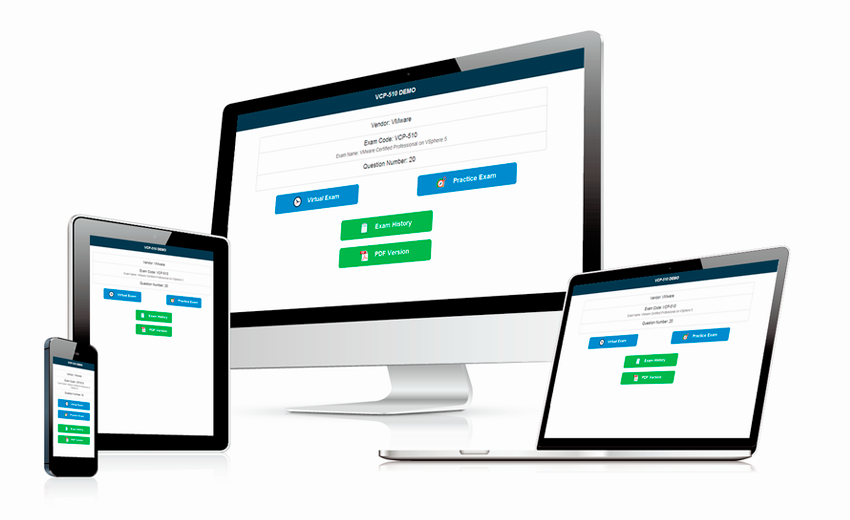
Before the clients purchase our AI-103 study practice guide, they can have a free trial freely. The clients can log in our company's website and visit the pages of our products. The pages of our products lists many important information about our Developing AI Apps and Agents on Azure exam materials and they include the price, version and updated time of our products, the exam name and code, the total amount of the questions and answers, the merits of our AI-103 useful test guide and the discounts. You can have a comprehensive understanding of our AI-103 useful test guide after you see this information. Then you can look at the free demos and try to answer them to see the value of our Developing AI Apps and Agents on Azure exam materials and finally decide to buy them or not.
Stimulate the real exam
Our AI-103 study practice guide boosts the function to stimulate the real exam. The clients can use our software to stimulate the real exam to be familiar with the speed, environment and pressure of the real AI-103 exam and get a well preparation for the real exam. Under the virtual exam environment the clients can adjust their speeds to answer the AI-103 questions, train their actual combat abilities and be adjusted to the pressure of the real test. They can also have an understanding of their mastery degree of our AI-103 study practice guide. The clients can use our software to stimulate the real exam at any time and there are no limits for the times of stimulation.
Our world is in the state of constant change and evolving. If you want to keep pace of the time and continually transform and challenge yourself you must attend one kind of Microsoft certificate test to improve your practical ability and increase the quantity of your knowledge. Buying our AI-103 study practice guide can help you pass the test smoothly. Our Developing AI Apps and Agents on Azure exam materials have gone through strict analysis and verification by senior experts and are ready to supplement new resources at any time. We try our best to present you the most useful and efficient information about the test and provide multiple functions and intuitive methods to help the clients learn efficiently. Learning our AI-103 useful test guide costs you little time and energy. The passing rate and hit rate are both high thus you will encounter few obstacles to pass the test. You can further understand our AI-103 study practice guide after you read the introduction as follow.

Microsoft AI-103 Exam Syllabus Topics:
| Section | Weight | Objectives |
|---|---|---|
| Topic 1: Implement computer vision solutions | 10–15% | - Build multimodal solutions
|
| Topic 2: Implement information extraction and knowledge mining | 10–15% | - Extract structured data from documents
|
| Topic 3: Implement generative AI and agentic solutions | 30–35% | - Build generative AI applications
|
| Topic 4: Implement text and speech analysis solutions | 10–15% | - Implement natural language processing
|
| Topic 5: Plan and manage Azure AI solutions | 25–30% | - Design Azure AI infrastructure
|
Microsoft Developing AI Apps and Agents on Azure Sample Questions:
1. You need to add an automated grounding check to a RAG application's continuous evaluation.
The check must return a simple pass or fail result and must not require you to deploy a separate judge model. Which evaluator should you use?
A) Groundedness, which returns a 1 to 5 score
B) Relevance
C) Groundedness Pro
D) Fluency
2. You are building a chatbot.
You need to ensure that the chatbot can classify user input into separate categories. The categories must be dynamic and defined at the time of inference.
Which service should you use to classify the input?
A) Azure OpenAI text summarization
B) Azure AI Language custom text classification
C) Azure OpenAI text classification
D) Azure AI Language custom named entity recognition (NER)
3. You have a Microsoft Foundry project that contains an agent and an image generation model deployment.
The agent generates original images from user-supplied product photos.
You need to ensure that the generated images maintain the product identity and visual characteristics of the provided photo.
What should you do?
A) Decrease the value of the temperature parameter.
B) Include a prompt and input image in the request.
C) Apply a groundedness detection filter.
D) Set the input_fidelity parameter to high.
4. You have an application that processes scanned PDF invoices. The invoices have varied layouts and include multipage tables.
You have a pipeline that uses optical character recognition (OCR) and extracts totals and invoice numbers. The results are often incorrect because the document structure is ignored.
You need to implement a solution that provides OCR, layout analysis, and template-generalizing field extraction. The solution must NOT require training a custom model. The solution must minimize administrative effort.
What should you include in the solution?
A) Azure Content Understanding in Foundry Tools
B) an Azure Machine Learning model
C) Azure Language in Foundry Tools
5. You have an Azure subscription that contains an Azure App Service app named App1.
You provision a Microsoft Foundry Service resource named CSAccount1.
You need to configure App1 to access CSAccount1. The solution must minimize administrative effort.
What should you use to configure App1?
A) the endpoint URI and an OAuth token
B) the endpoint URI and a shared access signature (SAS) token
C) the endpoint URI and subscription key
D) a system assigned managed identity and an X.509 certificate
Solutions:
| Question # 1 Answer: C | Question # 2 Answer: C | Question # 3 Answer: D | Question # 4 Answer: A | Question # 5 Answer: C |


 Louis
Louis 
 Dora
Dora  Cleveland
 Atwood
  Beatrice
 Lorraine
  Miranda
  Steven
  Spring
  Kyle
Kyle  Jim
Jim  Tess
Tess  Kerwin
  Kerwin
  Nick
Nick  Lucien
  Penelope
  Eden
Eden  Tobey
Tobey 


