


Free trials
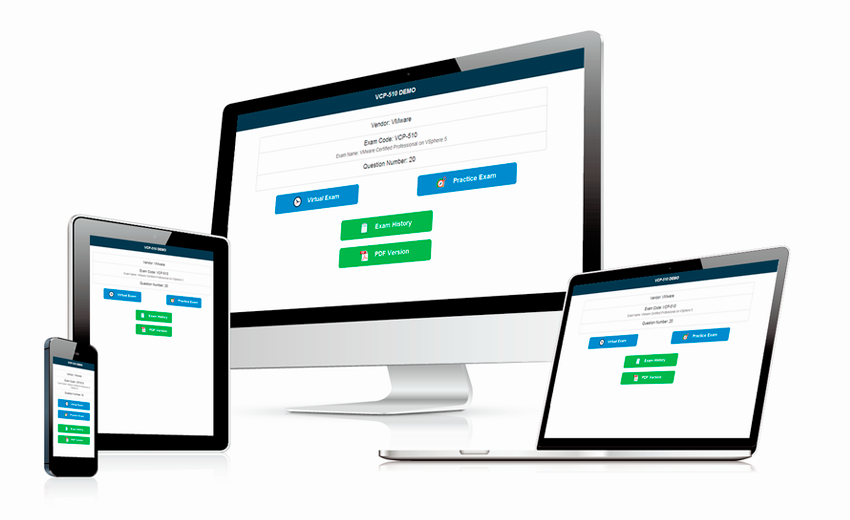
Before the clients purchase our DP-203 study practice guide, they can have a free trial freely. The clients can log in our company's website and visit the pages of our products. The pages of our products lists many important information about our Data Engineering on Microsoft Azure exam materials and they include the price, version and updated time of our products, the exam name and code, the total amount of the questions and answers, the merits of our DP-203 useful test guide and the discounts. You can have a comprehensive understanding of our DP-203 useful test guide after you see this information. Then you can look at the free demos and try to answer them to see the value of our Data Engineering on Microsoft Azure exam materials and finally decide to buy them or not.
Stimulate the real exam
Our DP-203 study practice guide boosts the function to stimulate the real exam. The clients can use our software to stimulate the real exam to be familiar with the speed, environment and pressure of the real DP-203 exam and get a well preparation for the real exam. Under the virtual exam environment the clients can adjust their speeds to answer the DP-203 questions, train their actual combat abilities and be adjusted to the pressure of the real test. They can also have an understanding of their mastery degree of our DP-203 study practice guide. The clients can use our software to stimulate the real exam at any time and there are no limits for the times of stimulation.
Save time
Our DP-203 useful test guide materials present the most important information to the clients in the simplest way so our clients need little time and energy to learn our DP-203 useful test guide. The clients only need 20-30 hours to learn and prepare for the test. For those people who are busy in their jobs, learning or other things this is a good news because they needn't worry too much that they don't have enough time to prepare for the test and can leisurely do their main things and spare little time to learn our DP-203 study practice guide. So it is a great advantage of our Data Engineering on Microsoft Azure exam materials and a great convenience for the clients.
Microsoft DP-203 Exam Syllabus Topics:
| Topic | Details |
|---|---|
Design and Implement Data Storage (40-45%) | |
| Design a data storage structure | - design an Azure Data Lake solution - recommend file types for storage - recommend file types for analytical queries - design for efficient querying - design for data pruning - design a folder structure that represents the levels of data transformation - design a distribution strategy - design a data archiving solution |
| Design a partition strategy | - design a partition strategy for files - design a partition strategy for analytical workloads - design a partition strategy for efficiency/performance - design a partition strategy for Azure Synapse Analytics - identify when partitioning is needed in Azure Data Lake Storage Gen2 |
| Design the serving layer | - design star schemas - design slowly changing dimensions - design a dimensional hierarchy - design a solution for temporal data - design for incremental loading - design analytical stores - design metastores in Azure Synapse Analytics and Azure Databricks |
| Implement physical data storage structures | - implement compression - implement partitioning - implement sharding - implement different table geometries with Azure Synapse Analytics pools - implement data redundancy - implement distributions - implement data archiving |
| Implement logical data structures | - build a temporal data solution - build a slowly changing dimension - build a logical folder structure - build external tables - implement file and folder structures for efficient querying and data pruning |
| Implement the serving layer | - deliver data in a relational star schema - deliver data in Parquet files - maintain metadata - implement a dimensional hierarchy |
Design and Develop Data Processing (25-30%) | |
| Ingest and transform data | - transform data by using Apache Spark - transform data by using Transact-SQL - transform data by using Data Factory - transform data by using Azure Synapse Pipelines - transform data by using Stream Analytics - cleanse data - split data - shred JSON - encode and decode data - configure error handling for the transformation - normalize and denormalize values - transform data by using Scala - perform data exploratory analysis |
| Design and develop a batch processing solution | - develop batch processing solutions by using Data Factory, Data Lake, Spark, Azure Synapse Pipelines, PolyBase, and Azure Databricks - create data pipelines - design and implement incremental data loads - design and develop slowly changing dimensions - handle security and compliance requirements - scale resources - configure the batch size - design and create tests for data pipelines - integrate Jupyter/Python notebooks into a data pipeline - handle duplicate data - handle missing data - handle late-arriving data - upsert data - regress to a previous state - design and configure exception handling - configure batch retention - design a batch processing solution - debug Spark jobs by using the Spark UI |
| Design and develop a stream processing solution | - develop a stream processing solution by using Stream Analytics, Azure Databricks, and Azure Event Hubs - process data by using Spark structured streaming - monitor for performance and functional regressions - design and create windowed aggregates - handle schema drift - process time series data - process across partitions - process within one partition - configure checkpoints/watermarking during processing - scale resources - design and create tests for data pipelines - optimize pipelines for analytical or transactional purposes - handle interruptions - design and configure exception handling - upsert data - replay archived stream data - design a stream processing solution |
| Manage batches and pipelines | - trigger batches - handle failed batch loads - validate batch loads - manage data pipelines in Data Factory/Synapse Pipelines - schedule data pipelines in Data Factory/Synapse Pipelines - implement version control for pipeline artifacts - manage Spark jobs in a pipeline |
Design and Implement Data Security (10-15%) | |
| Design security for data policies and standards | - design data encryption for data at rest and in transit - design a data auditing strategy - design a data masking strategy - design for data privacy - design a data retention policy - design to purge data based on business requirements - design Azure role-based access control (Azure RBAC) and POSIX-like Access Control List (ACL) for Data Lake Storage Gen2 - design row-level and column-level security |
| Implement data security | - implement data masking - encrypt data at rest and in motion - implement row-level and column-level security - implement Azure RBAC - implement POSIX-like ACLs for Data Lake Storage Gen2 - implement a data retention policy - implement a data auditing strategy - manage identities, keys, and secrets across different data platform technologies - implement secure endpoints (private and public) - implement resource tokens in Azure Databricks - load a DataFrame with sensitive information - write encrypted data to tables or Parquet files - manage sensitive information |
Monitor and Optimize Data Storage and Data Processing (10-15%) | |
| Monitor data storage and data processing | - implement logging used by Azure Monitor - configure monitoring services - measure performance of data movement - monitor and update statistics about data across a system - monitor data pipeline performance - measure query performance - monitor cluster performance - understand custom logging options - schedule and monitor pipeline tests - interpret Azure Monitor metrics and logs - interpret a Spark directed acyclic graph (DAG) |
| Optimize and troubleshoot data storage and data processing | - compact small files - rewrite user-defined functions (UDFs) - handle skew in data - handle data spill - tune shuffle partitions - find shuffling in a pipeline - optimize resource management - tune queries by using indexers - tune queries by using cache - optimize pipelines for analytical or transactional purposes - optimize pipeline for descriptive versus analytical workloads - troubleshoot a failed spark job - troubleshoot a failed pipeline run |
Our world is in the state of constant change and evolving. If you want to keep pace of the time and continually transform and challenge yourself you must attend one kind of Microsoft certificate test to improve your practical ability and increase the quantity of your knowledge. Buying our DP-203 study practice guide can help you pass the test smoothly. Our Data Engineering on Microsoft Azure exam materials have gone through strict analysis and verification by senior experts and are ready to supplement new resources at any time. We try our best to present you the most useful and efficient information about the test and provide multiple functions and intuitive methods to help the clients learn efficiently. Learning our DP-203 useful test guide costs you little time and energy. The passing rate and hit rate are both high thus you will encounter few obstacles to pass the test. You can further understand our DP-203 study practice guide after you read the introduction as follow.

What is Microsoft DP-203 Certification
Microsoft DP-203 (Designing Data Platform Solutions on Microsoft Azure) certification is a great way to validate your hands-on experience with cloud platforms, data architecture, and database technologies. This exam is designed to determine the competency of candidates to design distributed data solutions for enterprise applications based on Azure technologies. Before you begin studying for this exam, there are a few terms that you should familiarize yourself with. First and foremost, you should understand the difference between Microsoft SQL Server, Microsoft SQL Database, and Microsoft Azure SQL Database. Exam objectives are associated with these products; therefore, it is important to know when you will be tested on each one. Microsoft DP-203 Dumps tests a candidate's knowledge of Microsoft technologies used for building a data platform and cloud environment. Microsoft DP-203 is a certification of data engineers. The certification exam is designed to test the skills of designing, deploying, and managing Microsoft HDInsight and Microsoft Azure SQL Data Warehouse clusters for business intelligence and analytics solutions.
Reference: https://docs.microsoft.com/en-us/learn/certifications/exams/dp-203
How someone with a Microsoft DP-203 certificate will be better off?
There is no doubt that the DP-203 certificate on Microsoft Azure will be helpful in showing future employers and clients that you have a good understanding of the Microsoft Azure platform and have a sound knowledge of data management, data processing, and business intelligence. You can use this DP-203 certification to demonstrate your ability to build an enterprise-class data warehousing solution using Microsoft Azure's fully managed services. Microsoft DP-203 Dumps is the best way to ensure that you pass the exam on the first attempt. With these Microsoft DP-203 Practice Tests, you will be able to test your preparation before the real exam. After completing this course, you will be able to: Describe the challenges for data warehousing in the cloud. Understand how cloud storage works with Azure SQL Data Warehouse. Implement a relational database in the cloud using Azure SQL Database Managed Instance. Deploy a highly available and scalable data warehouse using Azure SQL Data Warehouse. External workloads load efficient nodes repartitioning folder selection guides duplicate hierarchy. Loading, archiving, pruning, premises, tabular, defined dimensional purposes. Stream table pipelines distribution handling control region temporal incremental dimensions structure tool. Demo PDF is also available.


 Byron
Byron 
 Harold
 Baird
Baird  Camille
  Kyle
Kyle  Cash
Cash 
 Allen
Allen  Dora
Dora  Penny
Penny  Rose
Rose  Harley
  Diana
Diana  Hardy
Hardy  Hayden
  Richard
  Kelly
Kelly  Mona
Mona  Gary
Gary 


