


Our world is in the state of constant change and evolving. If you want to keep pace of the time and continually transform and challenge yourself you must attend one kind of Google certificate test to improve your practical ability and increase the quantity of your knowledge. Buying our GCP-DE study practice guide can help you pass the test smoothly. Our Data Engineer exam materials have gone through strict analysis and verification by senior experts and are ready to supplement new resources at any time. We try our best to present you the most useful and efficient information about the test and provide multiple functions and intuitive methods to help the clients learn efficiently. Learning our GCP-DE useful test guide costs you little time and energy. The passing rate and hit rate are both high thus you will encounter few obstacles to pass the test. You can further understand our GCP-DE study practice guide after you read the introduction as follow.

Free trials
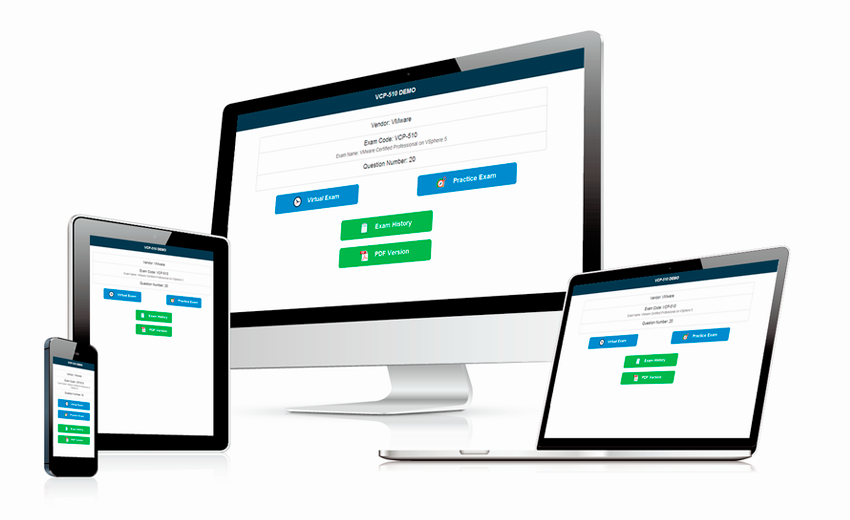
Before the clients purchase our GCP-DE study practice guide, they can have a free trial freely. The clients can log in our company's website and visit the pages of our products. The pages of our products lists many important information about our Data Engineer exam materials and they include the price, version and updated time of our products, the exam name and code, the total amount of the questions and answers, the merits of our GCP-DE useful test guide and the discounts. You can have a comprehensive understanding of our GCP-DE useful test guide after you see this information. Then you can look at the free demos and try to answer them to see the value of our Data Engineer exam materials and finally decide to buy them or not.
Stimulate the real exam
Our GCP-DE study practice guide boosts the function to stimulate the real exam. The clients can use our software to stimulate the real exam to be familiar with the speed, environment and pressure of the real GCP-DE exam and get a well preparation for the real exam. Under the virtual exam environment the clients can adjust their speeds to answer the GCP-DE questions, train their actual combat abilities and be adjusted to the pressure of the real test. They can also have an understanding of their mastery degree of our GCP-DE study practice guide. The clients can use our software to stimulate the real exam at any time and there are no limits for the times of stimulation.
Save time
Our GCP-DE useful test guide materials present the most important information to the clients in the simplest way so our clients need little time and energy to learn our GCP-DE useful test guide. The clients only need 20-30 hours to learn and prepare for the test. For those people who are busy in their jobs, learning or other things this is a good news because they needn't worry too much that they don't have enough time to prepare for the test and can leisurely do their main things and spare little time to learn our GCP-DE study practice guide. So it is a great advantage of our Data Engineer exam materials and a great convenience for the clients.
Google GCP-DE Exam Syllabus Topics:
| Section | Weight | Objectives |
|---|---|---|
| Topic 1: Building and operationalizing data processing systems | 30% | - Data pipeline implementation
|
| Topic 2: Maintaining and optimizing data and ML solutions | 20% | - Security and governance
|
| Topic 3: Operationalizing data and ML pipelines | 30% | - Pipeline automation and orchestration
|
| Topic 4: Designing data processing systems | 20% | - Data pipeline architecture design
|
Google Data Engineer Sample Questions:
You want to migrate an on-premises Hadoop system to Cloud Dataproc. Hive is the primary tool in use, and the data format is Optimized Row Columnar (ORC). All ORC files have been successfully copied to a Cloud Storage bucket. You need to replicate some data to the cluster's local Hadoop Distributed File System (HDFS) to maximize performance. What are two ways to start using Hive in Cloud Dataproc? (Choose two.)
- A. Mount the Hive tables from HDFS.
- B. Replicate external Hive tables to the native ones.
- C. Mount the Hive tables locally.
- D. Replicate external Hive tables to the native ones.
- E. Run the gsutil utility to transfer all ORC files from the Cloud Storage bucket to the master node of the Dataproc cluste
- F. Run the gsutil utility to transfer all ORC files from the Cloud Storage bucket to HDF
- G. Run the gsutil utility to transfer all ORC files from the Cloud Storage bucket to any node of the Dataproc cluste
- H. Leverage Cloud Storage connector for Hadoop to mount the ORC files as external Hive table
- I. Load the ORC files into BigQuer
- J. Mount the Hive tables locally.
- K. Leverage BigQuery connector for Hadoop to mount the BigQuery tables as external Hive table
- L. Then run the Hadoop utility to copy them do HDF
Correct Answer: C,G 🗳️
You are developing an application on Google Cloud that will automatically generate subject labels for users' blog posts. You are under competitive pressure to add this feature quickly, and you have no additional developer resources. No one on your team has experience with machine learning. What should you do?
- A. Call the model from your application and process the results as labels.
- B. Build and train a text classification model using TensorFlo
- C. Deploy the model using a KubernetesEngine cluste
- D. Process the generated Sentiment Analysis as labels.
- E. Call the Cloud Natural Language API from your applicatio
- F. Build and train a text classification model using TensorFlo
- G. Deploy the model using Cloud Machine Learning Engin
- H. Call the Cloud Natural Language API from your applicatio
- I. Call the model from your application and process the results as labels.
- J. Process the generated Entity Analysis as labels.
Correct Answer: J 🗳️
You are a retailer that wants to integrate your online sales capabilities with different in-home assistants, such as Google Home. You need to interpret customer voice commands and issue an order to the backend systems. Which solutions should you choose?
- A. Dialogflow Enterprise Edition
- B. Cloud AutoML Natural Language
- C. Cloud Natural Language API
- D. Cloud Speech-to-Text API
Correct Answer: B 🗳️
You used Cloud Dataprep to create a recipe on a sample of data in a BigQuery table. You want to reuse this recipe on a daily upload of data with the same schema, after the load job with variable execution time completes. What should you do?
- A. Create a cron schedule in Cloud Dataprep.
- B. Export the Cloud Dataprep job as a Cloud Dataflow template, and incorporate it into a Cloud Composer job.
- C. Create an App Engine cron job to schedule the execution of the Cloud Dataprep job.
- D. Export the recipe as a Cloud Dataprep template, and create a job in Cloud Scheduler.
Correct Answer: D 🗳️
Which of these is not a supported method of putting data into a partitioned table?
- A. Use ORDER BY to put a table's rows into chronological order and then change the table's type to "Partitioned".
- B. Run a query to get the records for a specific day from an existing table and for the destination table, specify a partitioned table ending with the day in the format "$YYYYMMDD".
- C. Create a partitioned table and stream new records to it every day.
- D. If you have existing data in a separate file for each day, then create a partitioned table and upload each file into the appropriate partition.
Correct Answer: A 🗳️
Explanation: Only visible for LatestCram members. You can sign-up / login (it's free).


 Alexia
 Myron
Myron 
 Elma
Elma 
 Phoebe
  Jacqueline
  Cathy
Cathy  Burnell
  Riva
Riva  Isidore
  Ives
Ives  Hardy
Hardy  Franklin
  Jared
Jared  Franklin
  Debby
Debby  Dale
Dale  Ashbur
  Alvis
Alvis  Bob
Bob  Maxine


