Our world is in the state of constant change and evolving. If you want to keep pace of the time and continually transform and challenge yourself you must attend one kind of Cisco certificate test to improve your practical ability and increase the quantity of your knowledge. Buying our 200-301日本語 study practice guide can help you pass the test smoothly. Our Cisco Certified Network Associate Exam (200-301日本語版) exam materials have gone through strict analysis and verification by senior experts and are ready to supplement new resources at any time. We try our best to present you the most useful and efficient information about the test and provide multiple functions and intuitive methods to help the clients learn efficiently. Learning our 200-301日本語 useful test guide costs you little time and energy. The passing rate and hit rate are both high thus you will encounter few obstacles to pass the test. You can further understand our 200-301日本語 study practice guide after you read the introduction as follow.

Stimulate the real exam
Our 200-301日本語 study practice guide boosts the function to stimulate the real exam. The clients can use our software to stimulate the real exam to be familiar with the speed, environment and pressure of the real 200-301日本語 exam and get a well preparation for the real exam. Under the virtual exam environment the clients can adjust their speeds to answer the 200-301日本語 questions, train their actual combat abilities and be adjusted to the pressure of the real test. They can also have an understanding of their mastery degree of our 200-301日本語 study practice guide. The clients can use our software to stimulate the real exam at any time and there are no limits for the times of stimulation.
Save time
Our 200-301日本語 useful test guide materials present the most important information to the clients in the simplest way so our clients need little time and energy to learn our 200-301日本語 useful test guide. The clients only need 20-30 hours to learn and prepare for the test. For those people who are busy in their jobs, learning or other things this is a good news because they needn't worry too much that they don't have enough time to prepare for the test and can leisurely do their main things and spare little time to learn our 200-301日本語 study practice guide. So it is a great advantage of our Cisco Certified Network Associate Exam (200-301日本語版) exam materials and a great convenience for the clients.
Free trials
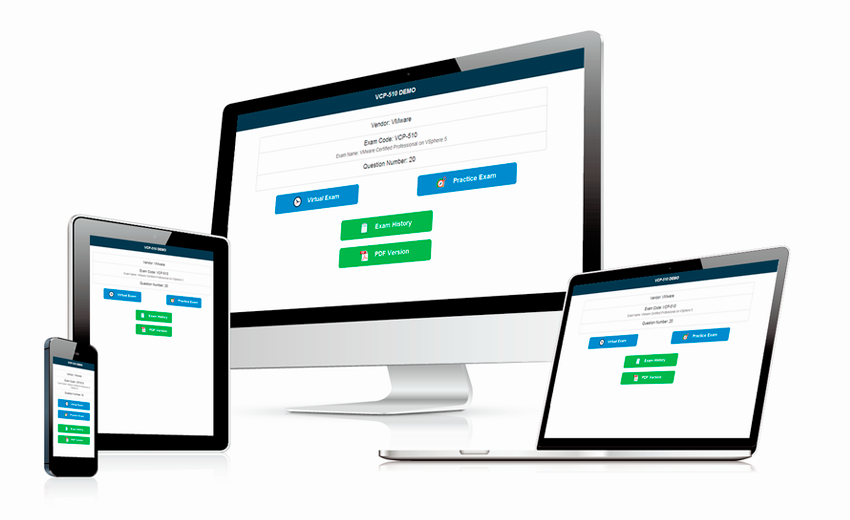
Before the clients purchase our 200-301日本語 study practice guide, they can have a free trial freely. The clients can log in our company's website and visit the pages of our products. The pages of our products lists many important information about our Cisco Certified Network Associate Exam (200-301日本語版) exam materials and they include the price, version and updated time of our products, the exam name and code, the total amount of the questions and answers, the merits of our 200-301日本語 useful test guide and the discounts. You can have a comprehensive understanding of our 200-301日本語 useful test guide after you see this information. Then you can look at the free demos and try to answer them to see the value of our Cisco Certified Network Associate Exam (200-301日本語版) exam materials and finally decide to buy them or not.
Understanding functional and technical aspects of 200-301 CCNA Exam: Cisco Certified Network Associate Network IP Services
The following will be discussed here:
- Explain the function of SNMP in network operations
- Explain the role of DHCP and DNS within the network
- Describe the capabilities and function of TFTP/FTP in the network
- Explain the forwarding per-hop behavior (PHB) for QoS such as classification, marking, queuing, congestion, policing, shaping
- Configure network devices for remote access using SSH
- Configure and verify DHCP client and relay
- IP Services
- Configure and verify inside source NAT using static and pools
- Configure and verify NTP operating in a client and server mode
- Describe the use of syslog features including facilities and levels
Understanding functional and technical aspects of 200-301 CCNA Exam: Cisco Certified Network Associate Network Security Fundamentals
The following will be discussed here:
- Recognize the capabilities of configuration management mechanisms Puppet, Chef, and Ansible
- Describe controller-based and software defined architectures (overlay, underlay, and fabric)
- Automation and Programmability
- North-bound and south-bound APIs
- Compare traditional campus device management with Cisco DNA Center enabled device management
- Describe characteristics of REST-based APIs (CRUD, HTTP verbs, and data encoding)
- Explain how automation impacts network management
- Interpret JSON encoded data
- Compare traditional networks with controller-based networking
- Separation of control plane and data plane
Cisco 200-301日本語 Exam Syllabus Topics:
| Section | Weight | Objectives |
|---|---|---|
| Network Fundamentals | 20% | - Identify interface and cable issues (collisions, errors, mismatch) - Explain virtualization fundamentals (virtual machines) - Describe the need for private IPv4 addressing - Describe wireless principles - Configure and verify IPv6 addressing and prefix - Describe switching concepts - Explain the role and function of network components - Compare IPv6 address types - Verify IP parameters for Client OS (Windows, Mac OS, Linux) - Describe characteristics of network topology architectures - Compare physical interface and cabling types - Compare TCP to UDP - Configure and verify IPv4 addressing and subnetting |
| IP Services | 10% | - Configure and verify inside source NAT using static and pools - Explain the forwarding per-hop behavior (PHB) for QoS such as classification, marking, queuing, congestion, policing, shaping - Configure network devices for remote access using SSH - Configure and verify DHCP client and relay - Explain the function of SNMP in network operations - Describe the capabilities and function of TFTP/FTP in the network - Describe the use of syslog features including facilities and levels - Configure and verify NTP operating in a client and server mode - Explain the role of DHCP and DNS within the network |
| Security Fundamentals | 15% | - Describe security password policies elements, such as management, complexity, and password alternatives (multifactor authentication, certificates, and biometrics) - Configure Layer 2 security features (DHCP snooping, dynamic ARP inspection, and port security) - Differentiate authentication, authorization, and accounting concepts - Configure device access control using local passwords - Define key security concepts (threats, vulnerabilities, exploits, and mitigation techniques) - Configure WLAN using WPA2 PSK using the GUI - Describe remote access and site-to-site VPNs - Describe wireless security protocols (WPA, WPA2, and WPA3) - Describe security program elements (user awareness, training, and physical access control) - Configure and verify access control lists |
| Automation and Programmability | 10% | - Describe characteristics of REST-based APIs (CRUD, HTTP verbs, and data encoding) - Interpret JSON encoded data - Compare traditional campus device management with Cisco DNA Center enabled device management - Explain how automation impacts network management - Compare traditional networks with controller-based networking - Describe controller-based and software defined architectures (overlay, underlay, and fabric) - Recognize the capabilities of configuration management mechanisms Puppet, Chef, and Ansible |
| IP Connectivity | 25% | - Configure and verify IPv4 and IPv6 static routing - Configure and verify single area OSPFv2 - Interpret the components of routing table - Determine how a router makes a forwarding decision by default - Describe the purpose of first hop redundancy protocol |
| Network Access | 20% | - Configure and verify Layer 2 discovery protocols (Cisco Discovery Protocol and LLDP) - Describe the need for and basic operations of Rapid PVST+ Spanning Tree Protocol - Configure the components of a wireless LAN access for client connectivity using GUI only such as WLAN creation, security settings, QoS profiles, and advanced WLAN settings - Configure and verify (Layer 2/Layer 3) EtherChannel (LACP) - Describe physical infrastructure connections of WLAN components (AP, WLC, access/trunk ports, and LAG) - Configure and verify interswitch connectivity - Configure and verify VLANs (normal range) spanning multiple switches - Describe AP and WLC management access connections (Telnet, SSH, HTTP, HTTPS, console, and TACACS+/RADIUS) - Describe Cisco Wireless Architectures and AP modes |