


Save time
Our Category-Manager useful test guide materials present the most important information to the clients in the simplest way so our clients need little time and energy to learn our Category-Manager useful test guide. The clients only need 20-30 hours to learn and prepare for the test. For those people who are busy in their jobs, learning or other things this is a good news because they needn't worry too much that they don't have enough time to prepare for the test and can leisurely do their main things and spare little time to learn our Category-Manager study practice guide. So it is a great advantage of our Certified Professional Category Manager (CPCM) exam materials and a great convenience for the clients.
Stimulate the real exam
Our Category-Manager study practice guide boosts the function to stimulate the real exam. The clients can use our software to stimulate the real exam to be familiar with the speed, environment and pressure of the real Category-Manager exam and get a well preparation for the real exam. Under the virtual exam environment the clients can adjust their speeds to answer the Category-Manager questions, train their actual combat abilities and be adjusted to the pressure of the real test. They can also have an understanding of their mastery degree of our Category-Manager study practice guide. The clients can use our software to stimulate the real exam at any time and there are no limits for the times of stimulation.
Our world is in the state of constant change and evolving. If you want to keep pace of the time and continually transform and challenge yourself you must attend one kind of CMA certificate test to improve your practical ability and increase the quantity of your knowledge. Buying our Category-Manager study practice guide can help you pass the test smoothly. Our Certified Professional Category Manager (CPCM) exam materials have gone through strict analysis and verification by senior experts and are ready to supplement new resources at any time. We try our best to present you the most useful and efficient information about the test and provide multiple functions and intuitive methods to help the clients learn efficiently. Learning our Category-Manager useful test guide costs you little time and energy. The passing rate and hit rate are both high thus you will encounter few obstacles to pass the test. You can further understand our Category-Manager study practice guide after you read the introduction as follow.

Free trials
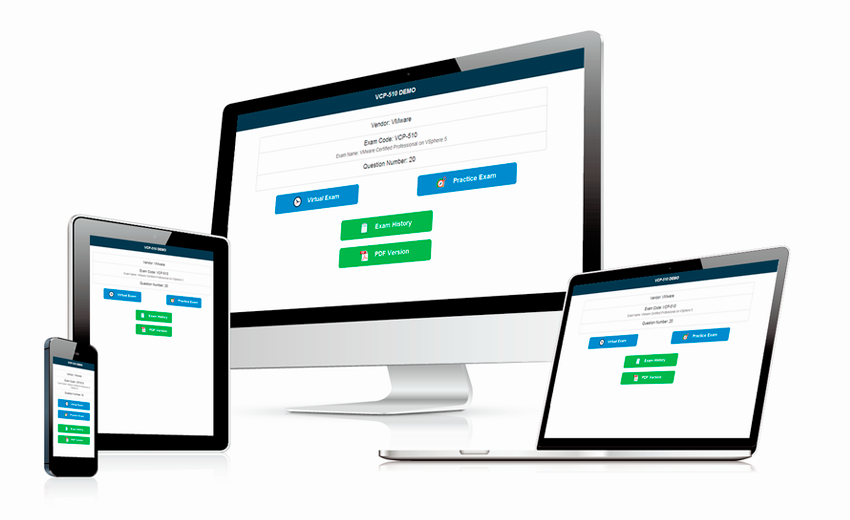
Before the clients purchase our Category-Manager study practice guide, they can have a free trial freely. The clients can log in our company's website and visit the pages of our products. The pages of our products lists many important information about our Certified Professional Category Manager (CPCM) exam materials and they include the price, version and updated time of our products, the exam name and code, the total amount of the questions and answers, the merits of our Category-Manager useful test guide and the discounts. You can have a comprehensive understanding of our Category-Manager useful test guide after you see this information. Then you can look at the free demos and try to answer them to see the value of our Certified Professional Category Manager (CPCM) exam materials and finally decide to buy them or not.
CMA Category-Manager Exam Syllabus Topics:
| Section | Objectives |
|---|---|
| Fact-Based Selling and Storytelling | - Communication and Insights
|
| Pricing and Promotion Analytics | - Commercial Strategy
|
| Category Health and Assessment | - Category Performance Evaluation
|
| Shopper and POS Data Analytics | - Building Data Competency
|
| Assortment and Space Management | - Retail Optimization
|
| Retail Economics and Supply Chain | - Business Operations
|
CMA Certified Professional Category Manager (CPCM) Sample Questions:
1. What is the primary purpose of sub-segment fair share analysis?
A) To allocate resources equally across all sub-segments.
B) To identify the best-selling product in a category.
C) To determine the profitability of a product or category.
D) To compare a sub-segment's market share with its share of a relevant benchmark to assess performance.
2. What is Midtown Mart's share of wallet (SOW) for Category X?
Table shown:
A) 75%
B) 27%
C) 25%
D) 60%
3. What is the primary purpose of Affinity Models in Category Management?
A) To group similar stores, shoppers, or products
B) To identify products shoppers switch to when their first choice is unavailable.
C) To identify co-purchase patterns, such as chips and salsa.
D) To predict future sales trends based on historical data
4. Which of the following best describes incremental drivers in category planning?
A) Strategies focused on long-term category growth, such as brand positioning and market expansion.
B) Tactics that are only applied to niche segments within a category, such as premium product lines.
C) Tactics that are changed often during a category planning cycle, such as temporary price reductions, ads, and displays.
D) Decisions that remain constant throughout the category planning cycle, such as product assortment and shelf space.
5. Product-based segmentation involves categorizing products into distinct groups, which of the following is NOT used as typical attribute for consideration?
A) Advertising Dollars
B) Consumer Usage
C) Product Type
D) Price Range
Solutions:
| Question # 1 Answer: D | Question # 2 Answer: A | Question # 3 Answer: C | Question # 4 Answer: C | Question # 5 Answer: A |


 Edgar
Edgar 
 Richard
  Bruce
Bruce  Nick
Nick 
 Penelope
  Christine
 Zenobia
  Xavier
  Noel
Noel  George
  Jodie
Jodie  Jamie
Jamie  Marcia
  Murphy
  Lauren
  Marguerite
  Grover
  Fabian
  Gail
Gail 


