


Stimulate the real exam
Our PCAP-31-03 study practice guide boosts the function to stimulate the real exam. The clients can use our software to stimulate the real exam to be familiar with the speed, environment and pressure of the real PCAP-31-03 exam and get a well preparation for the real exam. Under the virtual exam environment the clients can adjust their speeds to answer the PCAP-31-03 questions, train their actual combat abilities and be adjusted to the pressure of the real test. They can also have an understanding of their mastery degree of our PCAP-31-03 study practice guide. The clients can use our software to stimulate the real exam at any time and there are no limits for the times of stimulation.
Free trials
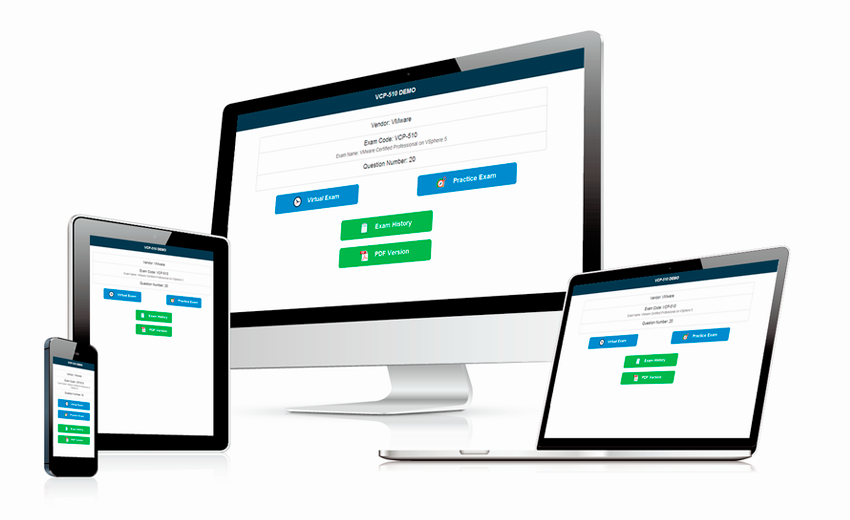
Before the clients purchase our PCAP-31-03 study practice guide, they can have a free trial freely. The clients can log in our company's website and visit the pages of our products. The pages of our products lists many important information about our Certified Associate in Python Programming exam materials and they include the price, version and updated time of our products, the exam name and code, the total amount of the questions and answers, the merits of our PCAP-31-03 useful test guide and the discounts. You can have a comprehensive understanding of our PCAP-31-03 useful test guide after you see this information. Then you can look at the free demos and try to answer them to see the value of our Certified Associate in Python Programming exam materials and finally decide to buy them or not.
Save time
Our PCAP-31-03 useful test guide materials present the most important information to the clients in the simplest way so our clients need little time and energy to learn our PCAP-31-03 useful test guide. The clients only need 20-30 hours to learn and prepare for the test. For those people who are busy in their jobs, learning or other things this is a good news because they needn't worry too much that they don't have enough time to prepare for the test and can leisurely do their main things and spare little time to learn our PCAP-31-03 study practice guide. So it is a great advantage of our Certified Associate in Python Programming exam materials and a great convenience for the clients.
Our world is in the state of constant change and evolving. If you want to keep pace of the time and continually transform and challenge yourself you must attend one kind of Python Institute certificate test to improve your practical ability and increase the quantity of your knowledge. Buying our PCAP-31-03 study practice guide can help you pass the test smoothly. Our Certified Associate in Python Programming exam materials have gone through strict analysis and verification by senior experts and are ready to supplement new resources at any time. We try our best to present you the most useful and efficient information about the test and provide multiple functions and intuitive methods to help the clients learn efficiently. Learning our PCAP-31-03 useful test guide costs you little time and energy. The passing rate and hit rate are both high thus you will encounter few obstacles to pass the test. You can further understand our PCAP-31-03 study practice guide after you read the introduction as follow.

PCAP - Certified Associate in Python Programming (PCAP-31-03) Exam Certified Professional salary
The estimated average salary of PCAP - Certified Associate in Python Programming (PCAP-31-03) professional is listed below:
- England: 70,600 POUNDS
- India: 20,40,000 INR
- Europe: 70,000 EURO
- United States: 120,000 USD
Topics of PCAP - Certified Associate in Python Programming (PCAP-31-03) Exam
The syllabus for the PCAP-31-03 exam dumps is listed below in detail of each section and their topics:
1. Control and Evaluations (25%)
Objectives covered by this section:
- conditional statements: if, if-else, if-elif, if-elif-else
- string operators: * +
- operators: unary and binary, priorities and binding
- accuracy of floating-point numbers
- assignments and shortcut operators
- the pass instruction
- building loops: while, for, range(), in, iterating through sequences
- simple strings: constructing, assigning, indexing, slicing comparing, immutability
- numeric operators: * / % // + -
- literals: Boolean, integer, floating-point numbers, scientific notation, strings
- bitwise operators: ~ & ^ | « »
- formatting print() output with end= and sep= arguments
- controlling loop execution: break, continue
- simple lists: constructing vectors, indexing, and slicing, the len() function
- relational operators (== != > >= < <= ), building complex Boolean expressions
- expanding loops: while-else, for-else, nesting loops, and conditional statements
- basic input and output: input(), print(), int(), float(), str() functions
- basic concepts: interpreting and the interpreter, compilation and the compiler, language elements, lexis, syntax and semantics, Python keywords, instructions, indenting
- Boolean operators: not and or
2. Data Aggregates (25%)
Objectives covered by this section:
- tuples: indexing, slicing, building, immutability
- dictionaries: building, indexing, adding and removing keys, iterating through dictionaries as well as their keys and values, checking key existence, keys(), items(), and values() methods
- lists in detail: indexing, slicing, basic methods (append(), insert(), index()) and functions (len(), sorted(), etc.), del instruction, iterating lists with the for loop, initializing, in and not in operators, list comprehension, copying and cloning
- tuples vs. lists: similarities and differences, lists inside tuples and tuples inside lists
- strings in detail: ASCII, UNICODE, UTF-8, immutability, escaping using the \ character, quotes and apostrophes inside strings, multiline strings, copying vs. cloning, advanced slicing, string vs. string, string vs. non-string, basic string methods (upper(), lower(), isxxx(), capitalize(), split(), join(), etc.) and functions (len(), chr(), ord()), escape characters
- lists in lists: matrices and cubes
3. Functions and Modules (25%)
Objectives covered by this section:
- writing and using modules, the name variable
- lambda functions, defining and using
- constructing and distributing packages, packages vs. directories, the role of the init.py file
- defining and invoking your functions and generators
- parameters vs. arguments, positional keyword and mixed argument passing, default parameter values
- import directives, qualifying entities with module names, initializing modules
- converting generator objects into lists using the list() function
- name scopes, name hiding (shadowing), the global keyword
- Python hashbangs, using multiline strings as module documentation
- map(), filter(), reduce(), reversed(), sorted() functions and the sort() method
- hiding module entities
- pyc file creation and usage
- the if operator
- return and yield keywords, returning results, the None keyword, recursion
4. Classes, Objects, and Exceptions (25%)
Objectives covered by this section:
- writing and using constructors
- introspection: dict, name, module, bases properties, examining class/object structure
- the anatomy of an exception object
- using predefined exceptions and defining your ones
- exceptions hierarchy, assigning more than one exception to one except branch
- the init method
- adding your exceptions to an existing hierarchy
- defining your classes, superclasses, subclasses, inheritance, searching for missing class components, creating objects
- the try-except-else-finally block, the raise statement, the except-as variant
- name mangling
- inheritance and overriding, finding class/object components
- class methods: defining and using the self-parameter meaning and usage
- class attributes: class variables and instance variables, defining, adding, and removing attributes, explicit constructor invocation
- single inheritance vs. multiple inheritances
- input/output basics: opening files with the open() function, stream objects, binary vs. text files, newline character translation, reading and writing files, byte array objects
- assertions
- hasattr(), type(), issubclass(), isinstance(), super() functions
- the role of the str method
- invoking methods, passing and using the self-argument/parameter
- read(), readinto(), readline(), write(), close() methods
Reference: https://pythoninstitute.org/certification/pcap-certification-associate/pcap-exam-syllabus/
Python Institute PCAP-31-03 Exam Syllabus Topics:
| Section | Weight | Objectives |
|---|---|---|
| Topic 1: Miscellaneous Topics | 10% | - Basic I/O and file handling
|
| Topic 2: Exceptions and Error Handling | 20% | - Built-in exceptions
|
| Topic 3: Object-Oriented Programming (OOP) | 35% | - Inheritance and polymorphism
|
| Topic 4: Modules and Packages | 20% | - Python modules import system
|
| Topic 5: Data Types, Strings, and Core Syntax | 15% | - Core Python constructs
|


 Robin
Robin 
 Milo
Milo 
 Trista
  Andre
Andre  Hedda
Hedda  Steven
 Burton
  Gladys
  Daisy
Daisy  Georgia
  Athena
  Irma
Irma  Lyndon
  Mamie
Mamie  Fay
Fay  Winston


