Free trials
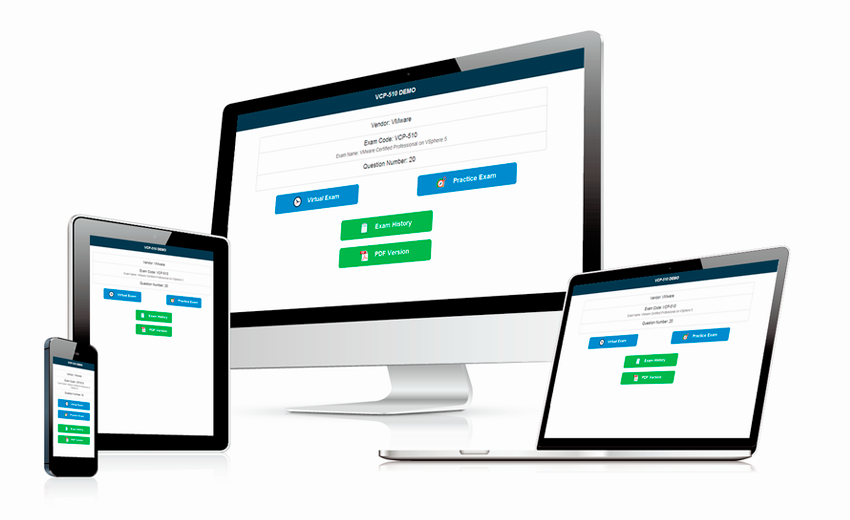
Before the clients purchase our A2180-374 study practice guide, they can have a free trial freely. The clients can log in our company's website and visit the pages of our products. The pages of our products lists many important information about our Assessment: IBM WebSphere MQ V7.0, System Administration exam materials and they include the price, version and updated time of our products, the exam name and code, the total amount of the questions and answers, the merits of our A2180-374 useful test guide and the discounts. You can have a comprehensive understanding of our A2180-374 useful test guide after you see this information. Then you can look at the free demos and try to answer them to see the value of our Assessment: IBM WebSphere MQ V7.0, System Administration exam materials and finally decide to buy them or not.
Stimulate the real exam
Our A2180-374 study practice guide boosts the function to stimulate the real exam. The clients can use our software to stimulate the real exam to be familiar with the speed, environment and pressure of the real A2180-374 exam and get a well preparation for the real exam. Under the virtual exam environment the clients can adjust their speeds to answer the A2180-374 questions, train their actual combat abilities and be adjusted to the pressure of the real test. They can also have an understanding of their mastery degree of our A2180-374 study practice guide. The clients can use our software to stimulate the real exam at any time and there are no limits for the times of stimulation.
Save time
Our A2180-374 useful test guide materials present the most important information to the clients in the simplest way so our clients need little time and energy to learn our A2180-374 useful test guide. The clients only need 20-30 hours to learn and prepare for the test. For those people who are busy in their jobs, learning or other things this is a good news because they needn't worry too much that they don't have enough time to prepare for the test and can leisurely do their main things and spare little time to learn our A2180-374 study practice guide. So it is a great advantage of our Assessment: IBM WebSphere MQ V7.0, System Administration exam materials and a great convenience for the clients.
Our world is in the state of constant change and evolving. If you want to keep pace of the time and continually transform and challenge yourself you must attend one kind of IBM certificate test to improve your practical ability and increase the quantity of your knowledge. Buying our A2180-374 study practice guide can help you pass the test smoothly. Our Assessment: IBM WebSphere MQ V7.0, System Administration exam materials have gone through strict analysis and verification by senior experts and are ready to supplement new resources at any time. We try our best to present you the most useful and efficient information about the test and provide multiple functions and intuitive methods to help the clients learn efficiently. Learning our A2180-374 useful test guide costs you little time and energy. The passing rate and hit rate are both high thus you will encounter few obstacles to pass the test. You can further understand our A2180-374 study practice guide after you read the introduction as follow.

IBM Assessment: IBM WebSphere MQ V7.0, System Administration Sample Questions:
1. An administrator was asked to restrict the IBM WebSphere MQ trace file size on AIX to 10 MB. How can the administrator do this?
A) Pass the value as a parameter to strmqtrc
B) Use the command setmqscp
C) Set the MaxSize parameter under Trace Stanza
D) Use the environment variable MQS_TRACE_OPTIONS
2. A legacy application uses MQPUT to send messages to a queue INV. Which set of MQSC commands below will successfully configure the queue manager so that a number of JMS applications can receive these messages by subscribing to topic Inventory/CurrentItems?
A) DEFINE TOPIC(INV_TOPIC) + TOPICSTR(Inventory/CurrentItems) DEFINE TALIAS(INV) TARGET(INV_TOPIC) TARGTYPE(TOPIC)
B) DEFINE TOPIC (INV_TOPIC) + TOPICSTR(Inventory/CurrentItems) QALIAS(INV)
C) DEFINE QALIAS(INV) TARGET(Inventory/CurrentItems) + TARGTYPE(TOPIC)
D) DEFINE TOPIC(INV_TOPIC) + TOPICSTR(Inventory/CurrentItems) DEFINE QALIAS(INV) TARGET(INV_TOPIC) TARGTYPE(TOPIC)
3. An application is putting messages on queue TEST.QUEUE. The queue manager is running on mydomain.company.com listening on the default port. The IBM WebSphere MQ Bridge for HTTP was deployed under the context WMQBridge in an IBM WebSphere Application Server listening on port 9082 on the same machine. How can an AJAX application running on a remote machine perform a destructive get of messages from TEST.QUEUE?
A) Issue an HTTP DELETE from URI http://mydomain.company.com:9082/WMQBridge/msg/queue/TEST.QUEUE
B) Issue an HTTP GET from URI http://mydomain.company.com:9082/WMQBridge/msg/queue/TEST.QUEUE
C) Issue an HTTP GET from URI http://mydomain.company.com:1414/WMQBridge/msg/queue/TEST.QUEUE
D) Issue an HTTP POST to URI http://mydomain.company.com:1414/WMQBridge/msg/queue/TEST.QUEUE
4. An administrator is migrating queue managers on both AIX and Solaris platforms from WebSphere MQ V5.3 to V70.
Which approach is the fastest to successfully migrate the queue managers?
A) Install V7.0 on AIX Install V7.0 on Solaris
B) Uninstall V 5.3 on both AIX and Solaris Install V7.0 on both AIX and Solaris
C) Uninstall V5.3 then install V7.0 on AIX Install V7.0 on Solaris
D) Install V7.0 on AIX Uninstall V5.3 then install V7.0 on Solaris
5. An administrator has defined MQ objects on 3 queue manager QM1, QM2, QM3 as follows. An application connects to QM1 and puts the message on MY.ALIAS.QUEUE.
On which queue will the message end up?
QM QM1:
DEFINE QALIAS (MY.ALIAS.QUKUE) TARGET (YELLOW.QUEUE)
DEFINE QREMOTE (YELLOW.QUEUE) RNAME (YELLOW) RQMNAME (QM2) +
XMITQ (QM2)
DEFINE QLOCAL (QM2) USAGE (XMITO)
DEFINE QLOCAL (QM3) USAGE (XMITO)
DEFINE QLOCAL (DLQ)
ALTER QALIAS (MY.ALLAS.QUEUE) TARGET (ORANGE.QUEUE) FORCE
DEFINE CHANNEL (QM1.TO.QM2) CHLTYPE (SDR) TRPTYPE (TCP) REPLACE+
DESCE ('Sender channel to QM2') XMITQ (QM2) +
CONNAME ('9.20.9.32 (1412) ')
DEFINE CHANNEL (QM1.TO.QM3) CHLTYPE (SDR) TRPYPE (TCP) REPLACE +
DESCR ('Sender channel to QM3') XMITQ (QM3) +
CONNAME ('9.20.9.33 (1415) ')
QM QM2:
DEFINE QLOCAL (YELLOW)
DEFINE QLOCAL (DLQ)
DEFINE CHANNEL (QMQ.TO.QM2) CHLTYPE (RCVR) TRPTYPE (TCP) +
REPLACE DESCR ('Receiver channel from QM1')
QM QM3:
DEFINE QLOCAL (ORANGE)
DEFINE QLOCAL (DLQ)
DEFINE CHANNEL (QM1.TO.QM3) CHLTYPE (RCVR) TRPTYPE (TCP) +
REPLACE DESCR ('Receiver channel from QM1')
A) ORANGE on QM3
B) DLQ on QM1
C) QM2 on QM1
D) YELLOW on QM2
Solutions:
| Question # 1 Answer: A | Question # 2 Answer: D | Question # 3 Answer: A | Question # 4 Answer: C | Question # 5 Answer: C |